

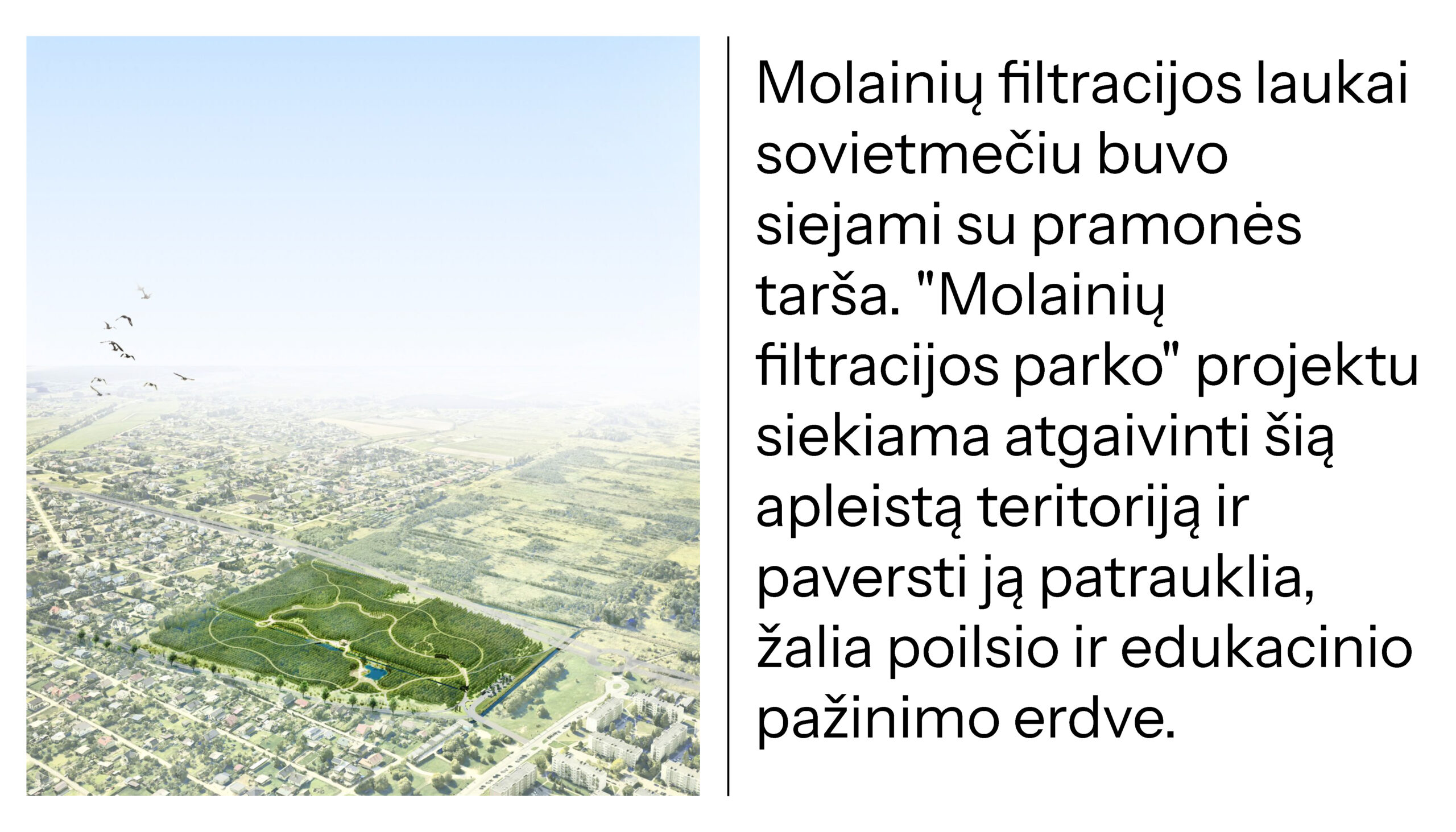
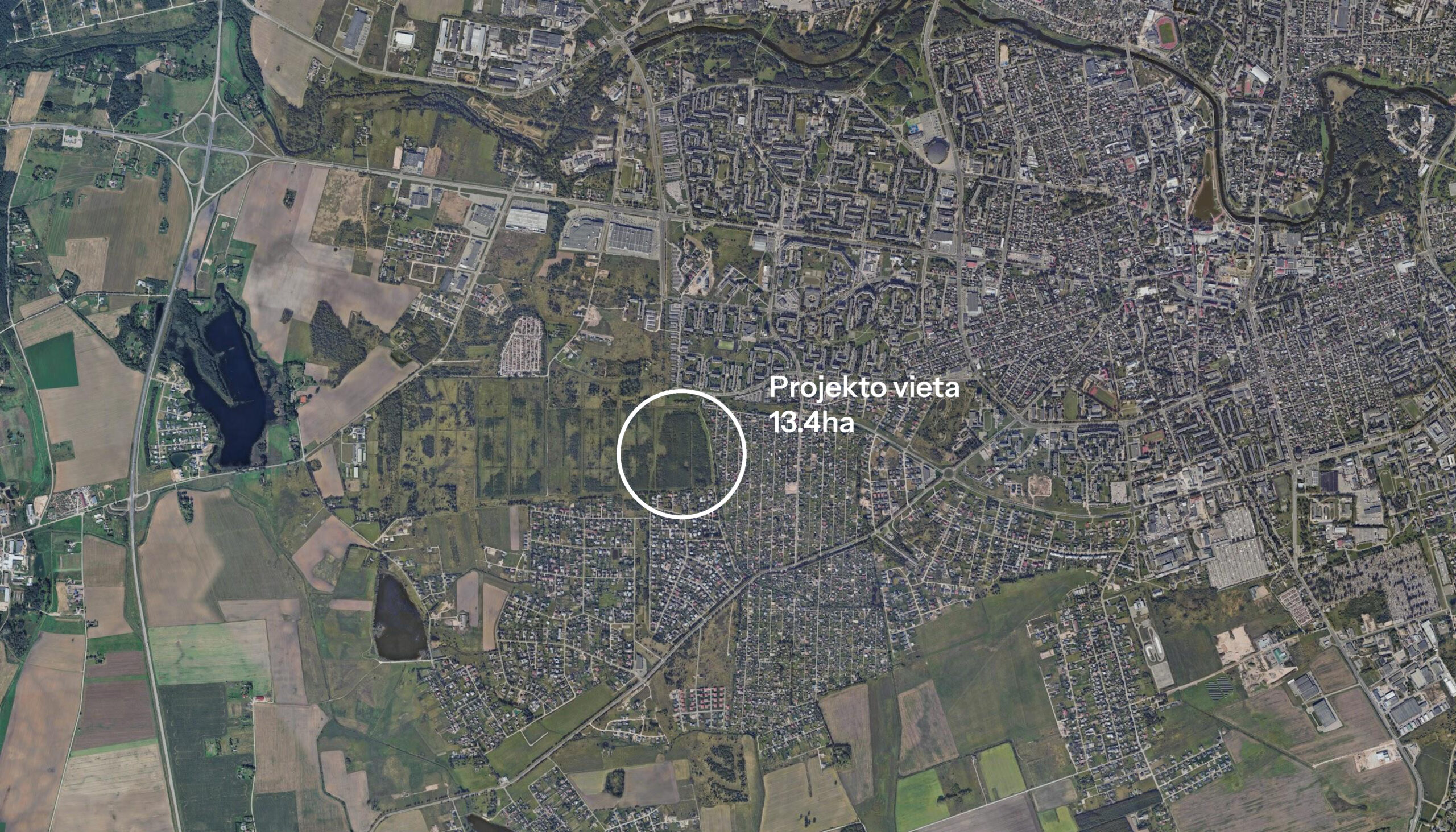
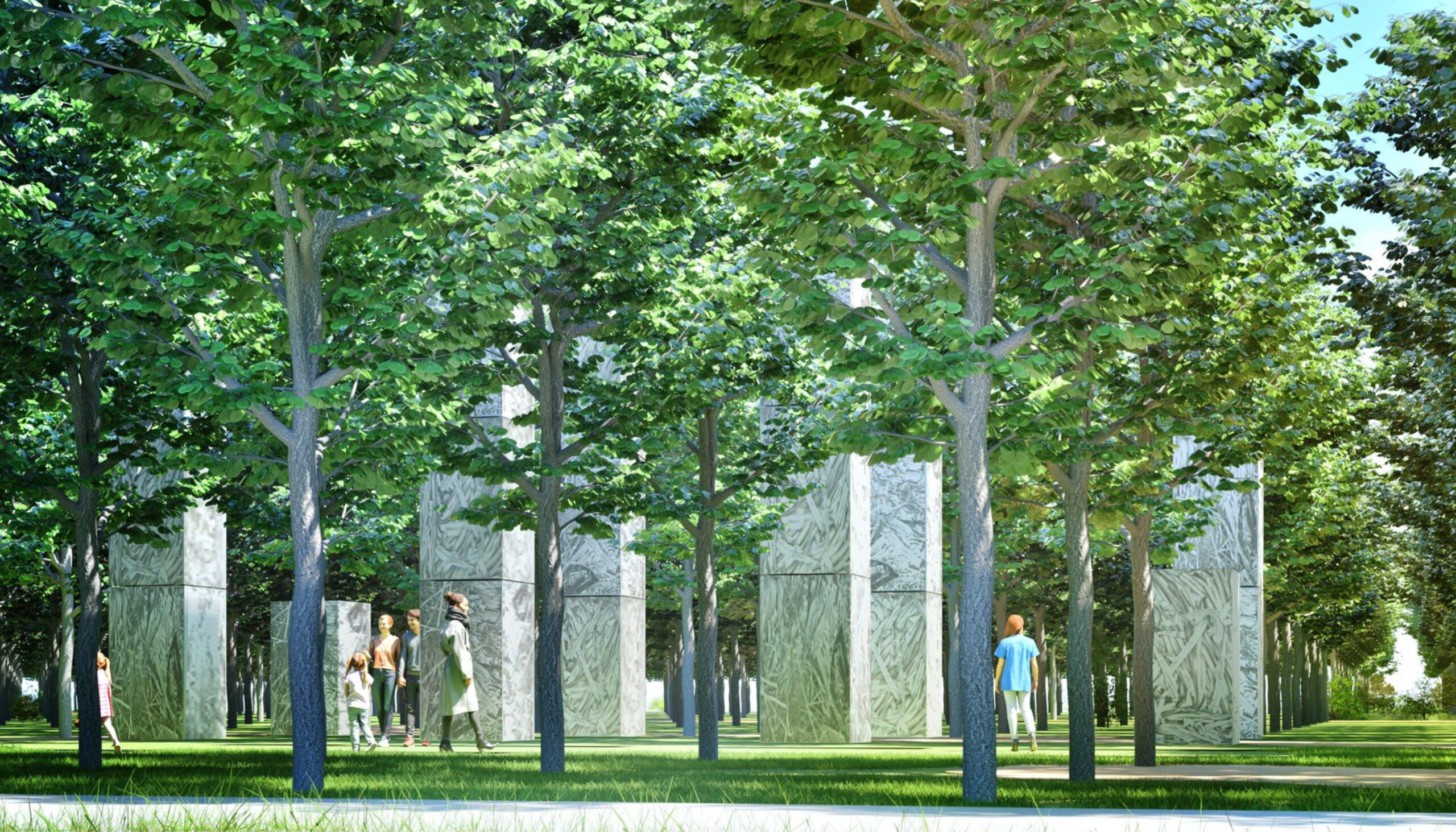

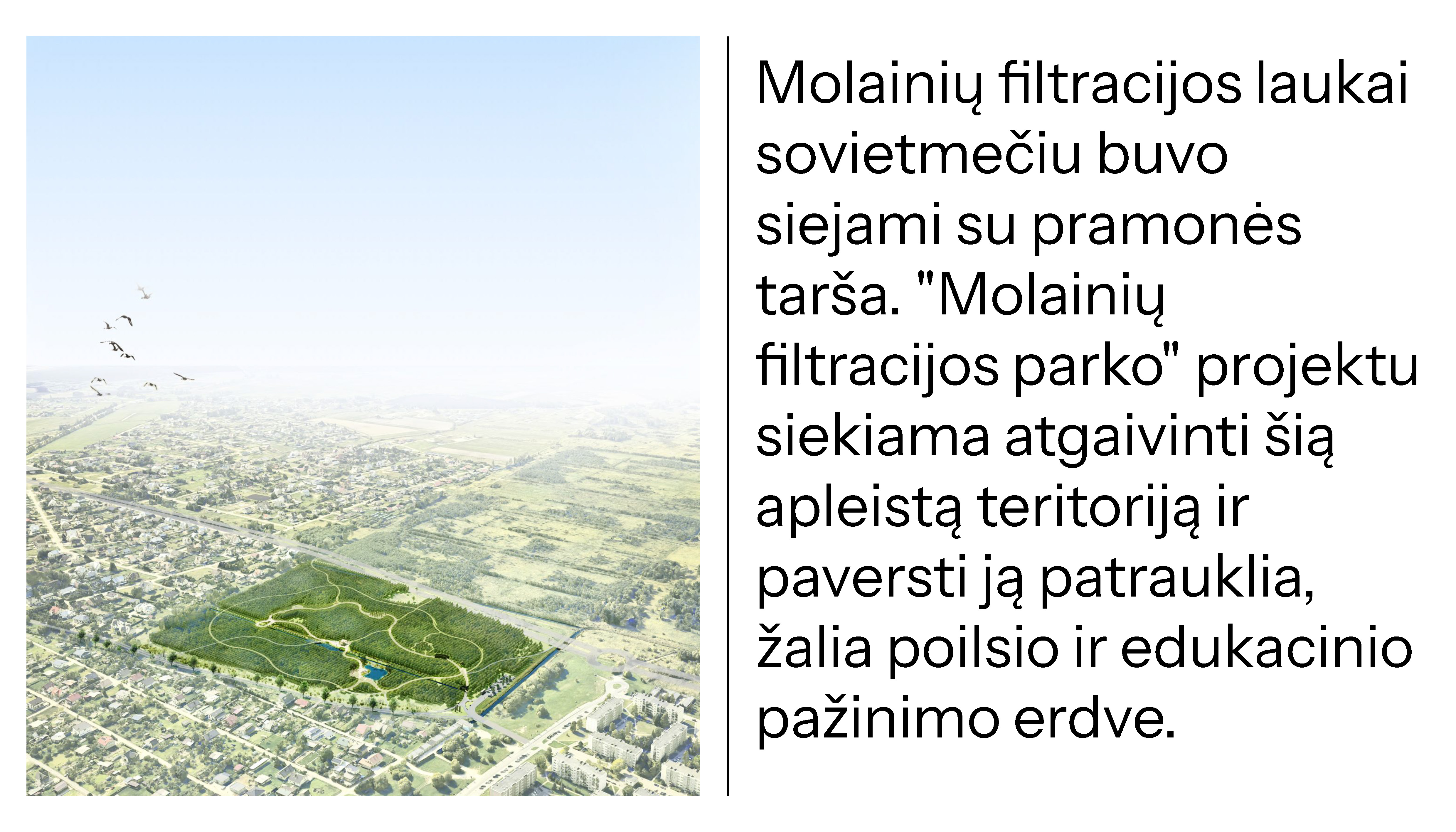
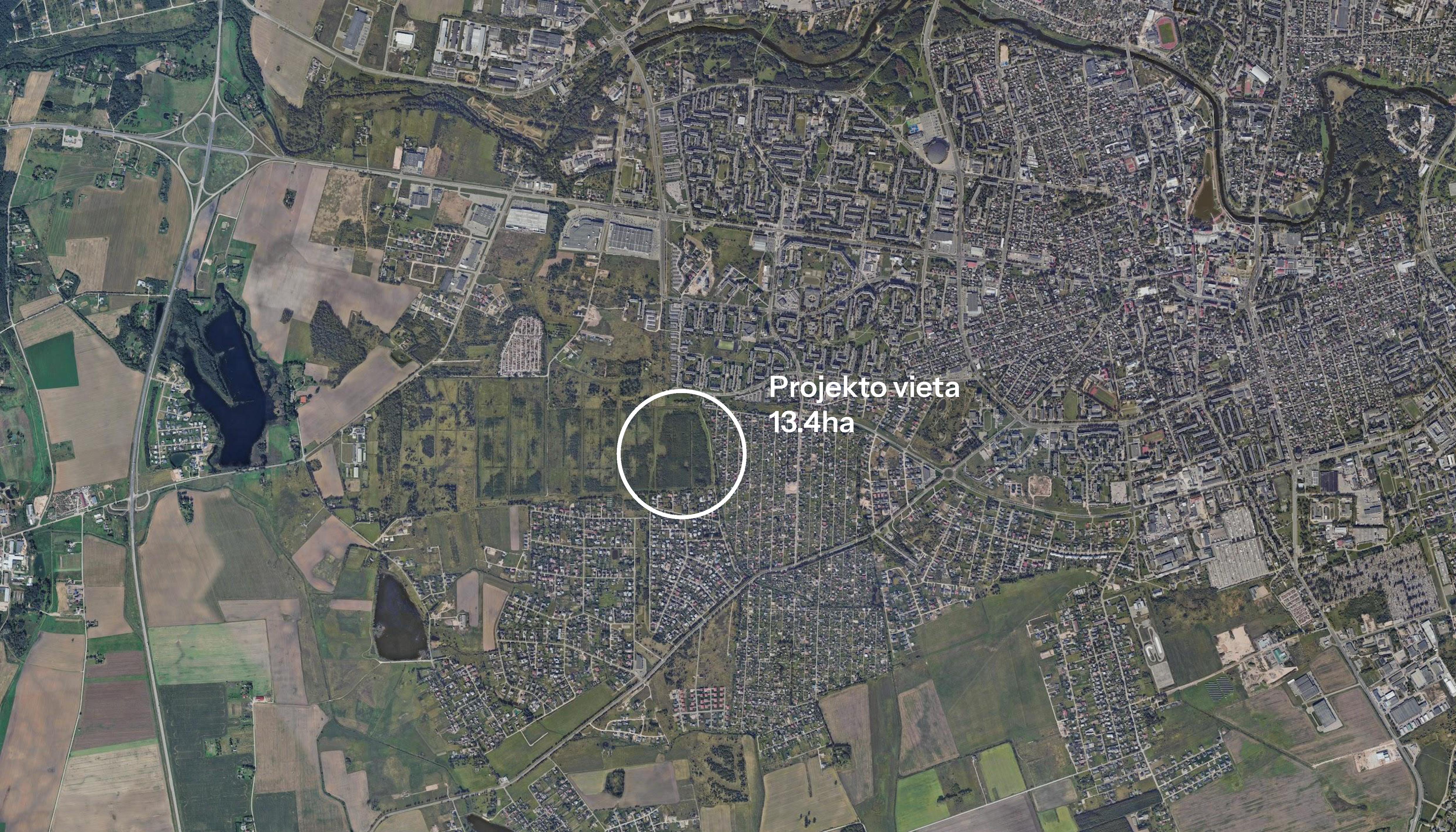


Panevėžys has faced significant ecological problems – the 62-hectare Molainiai filtration fields were polluted during the Soviet era with waste from the heavy metals industry.
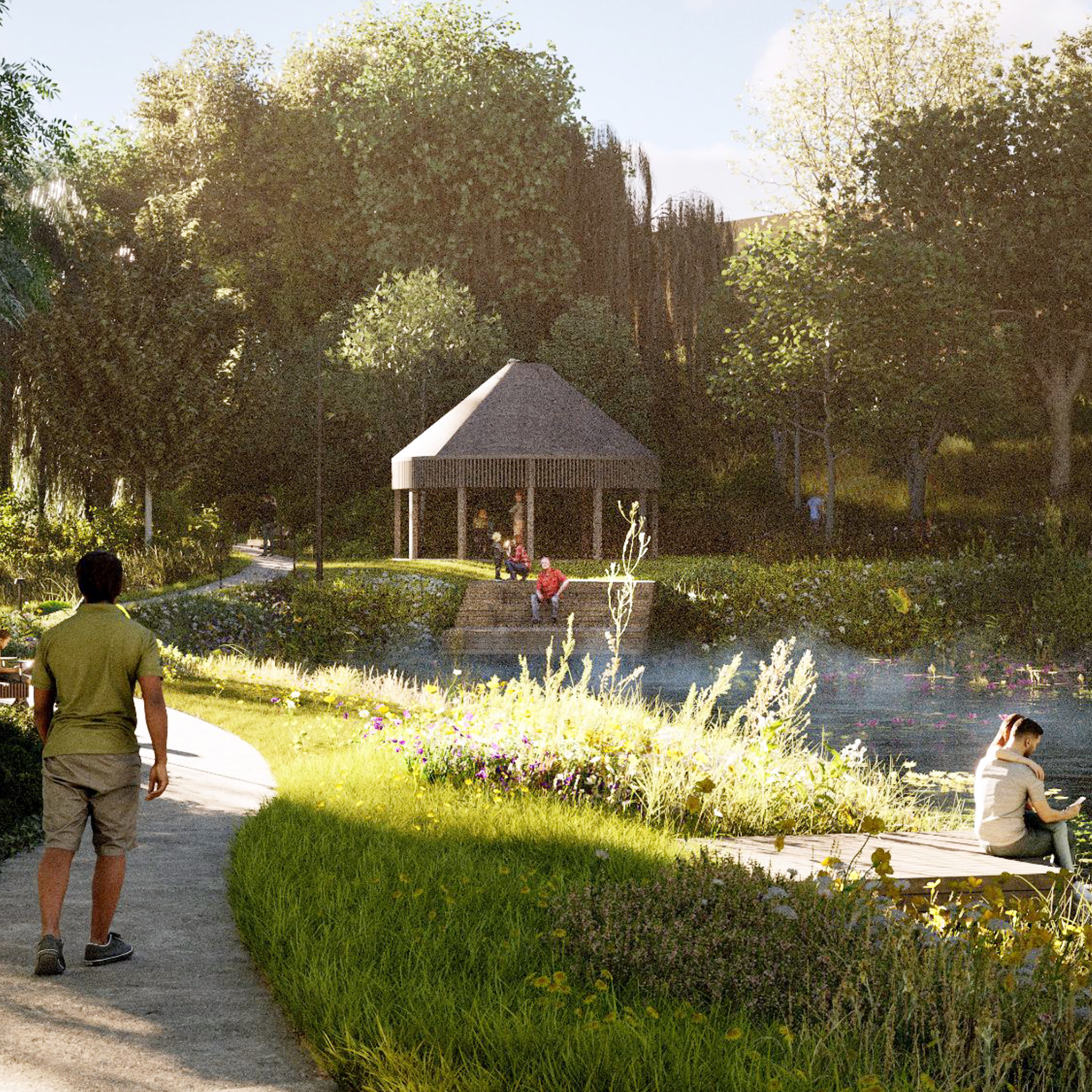
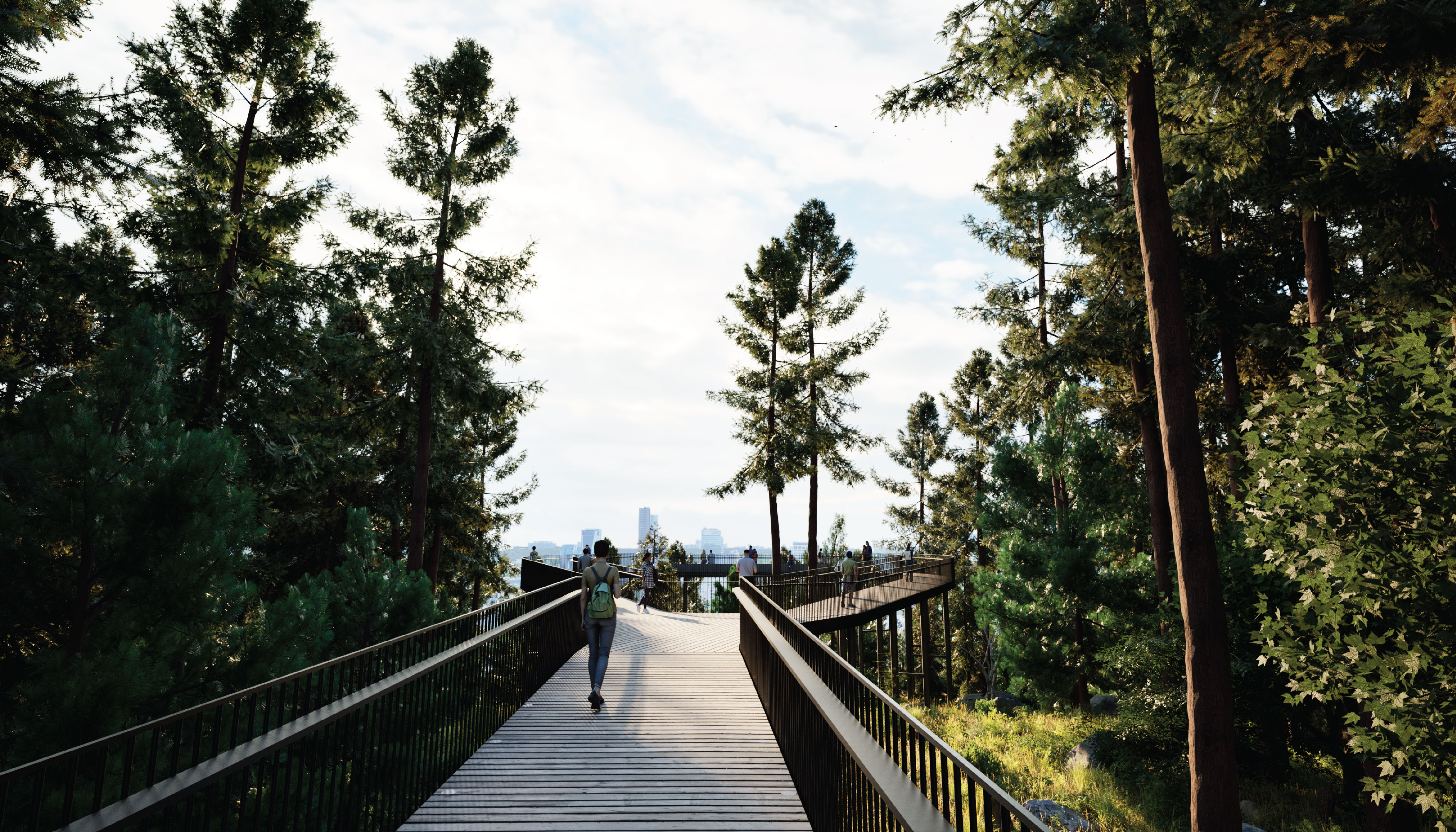
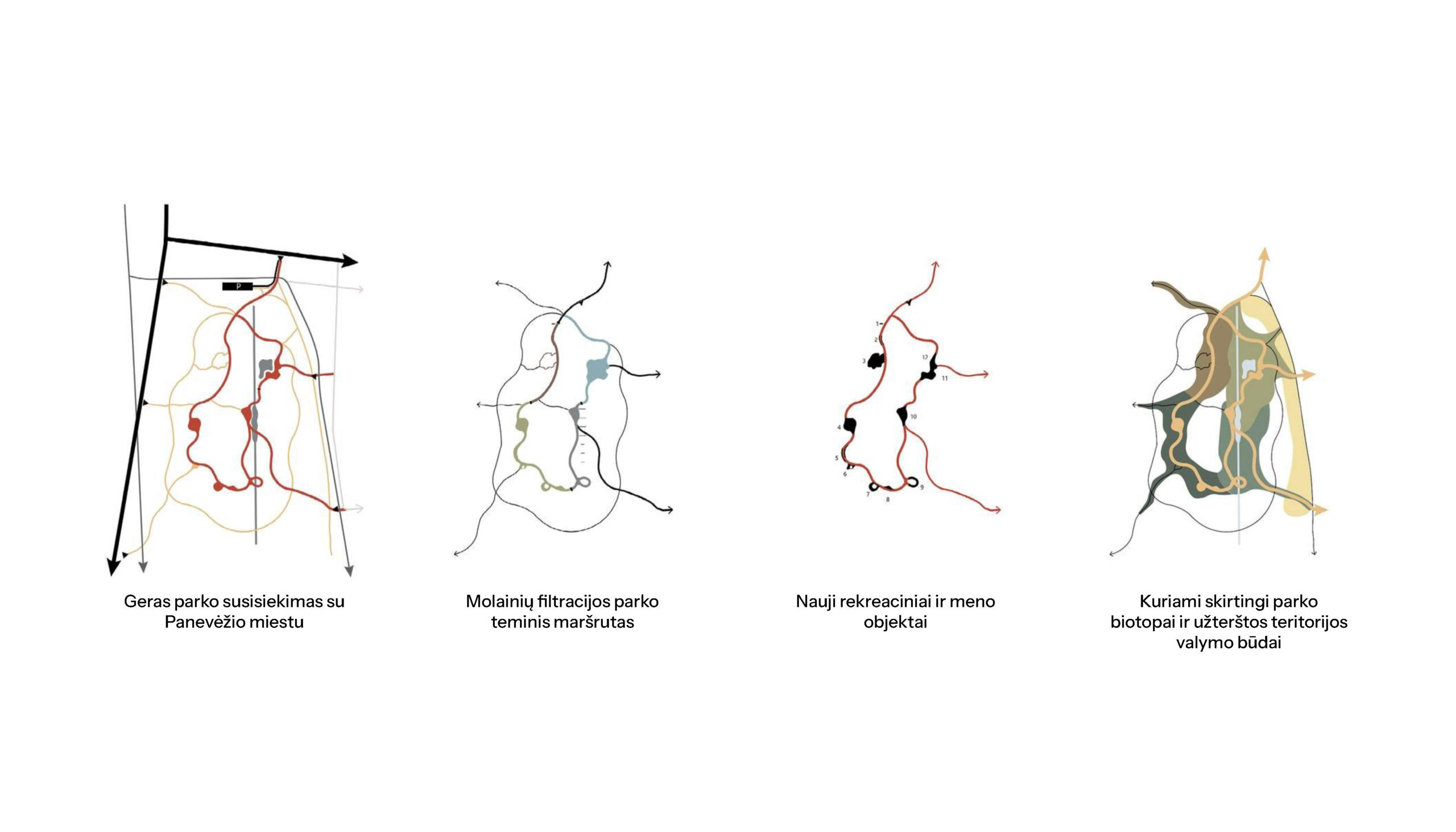
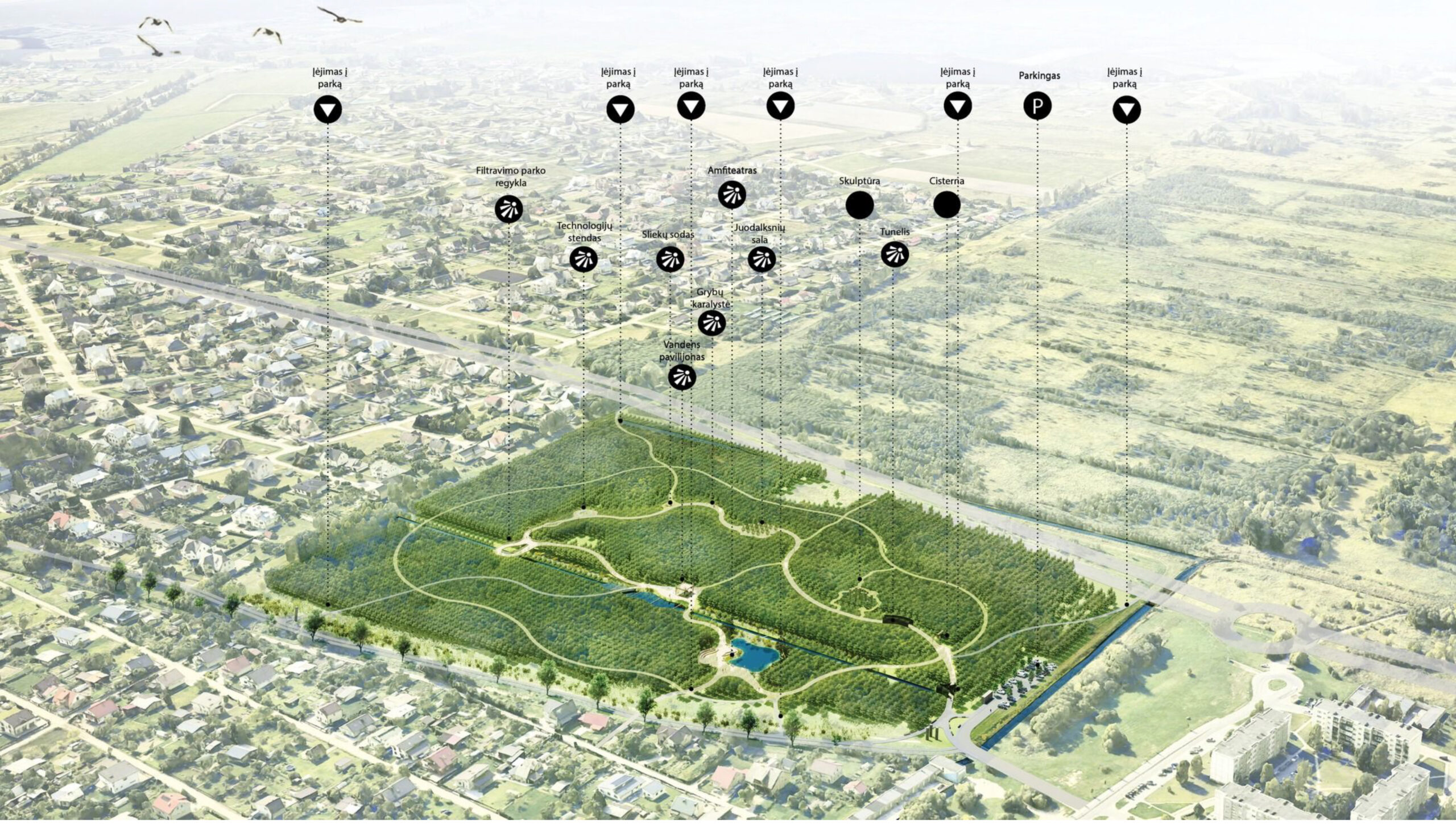
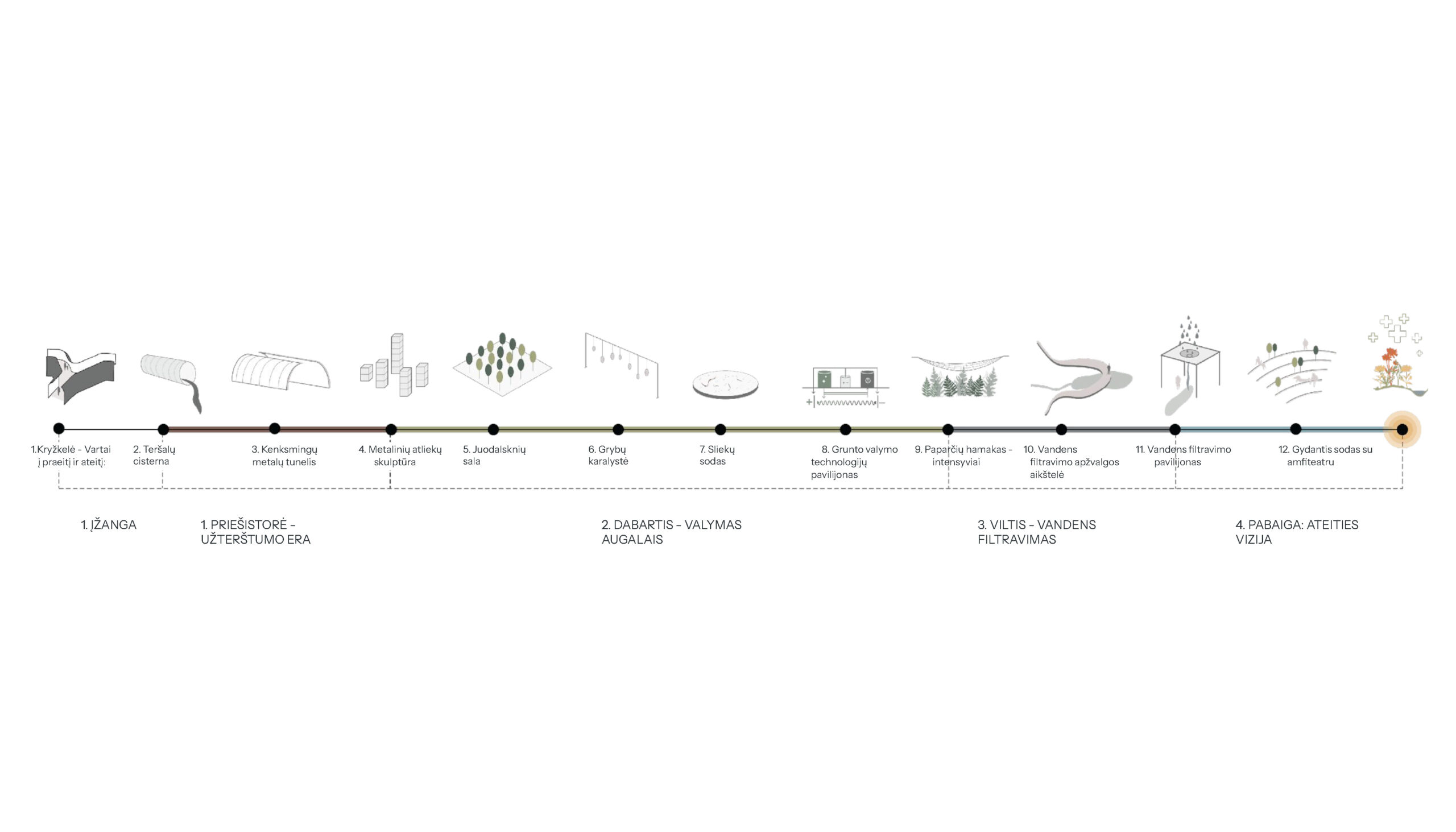
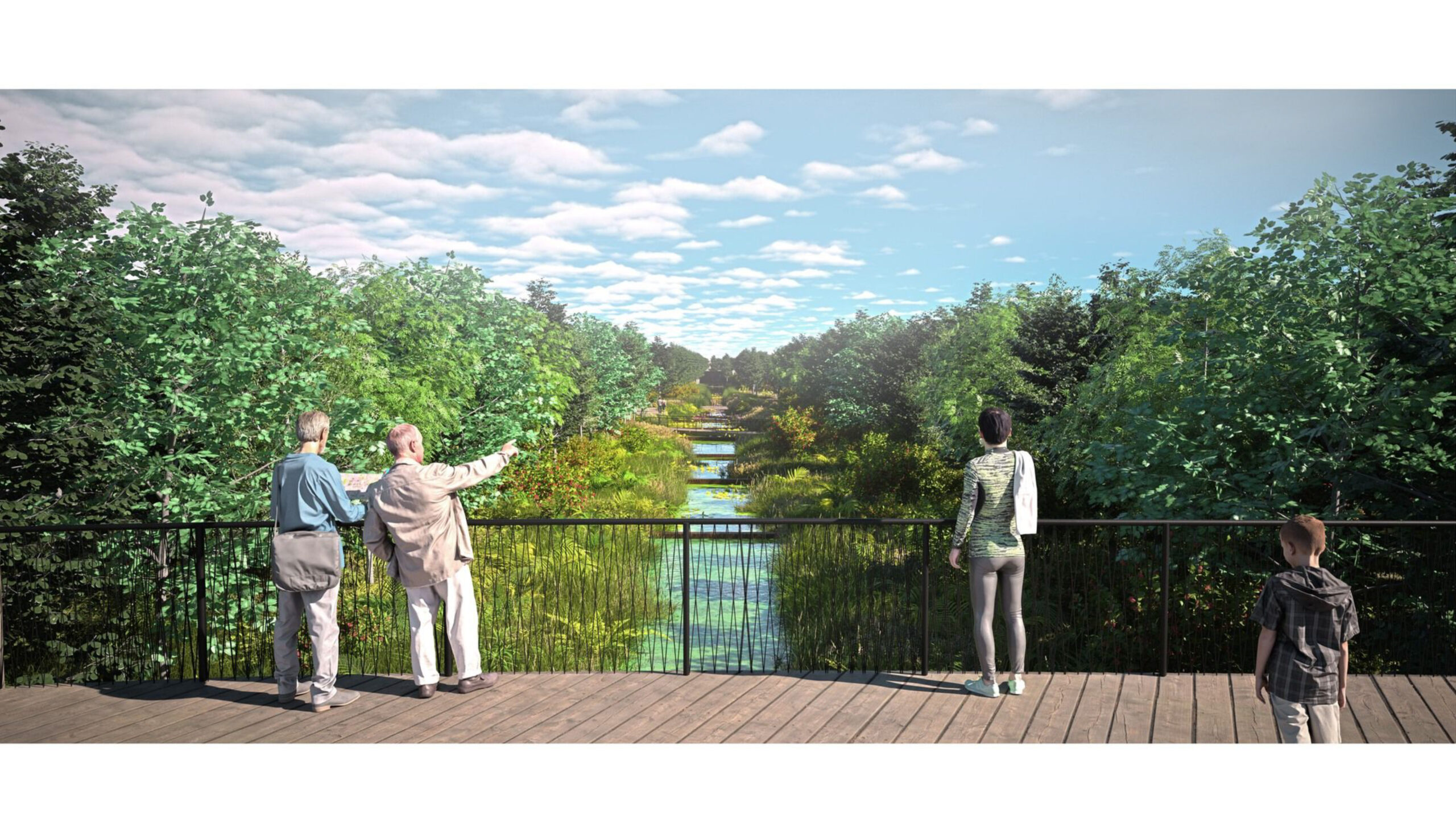
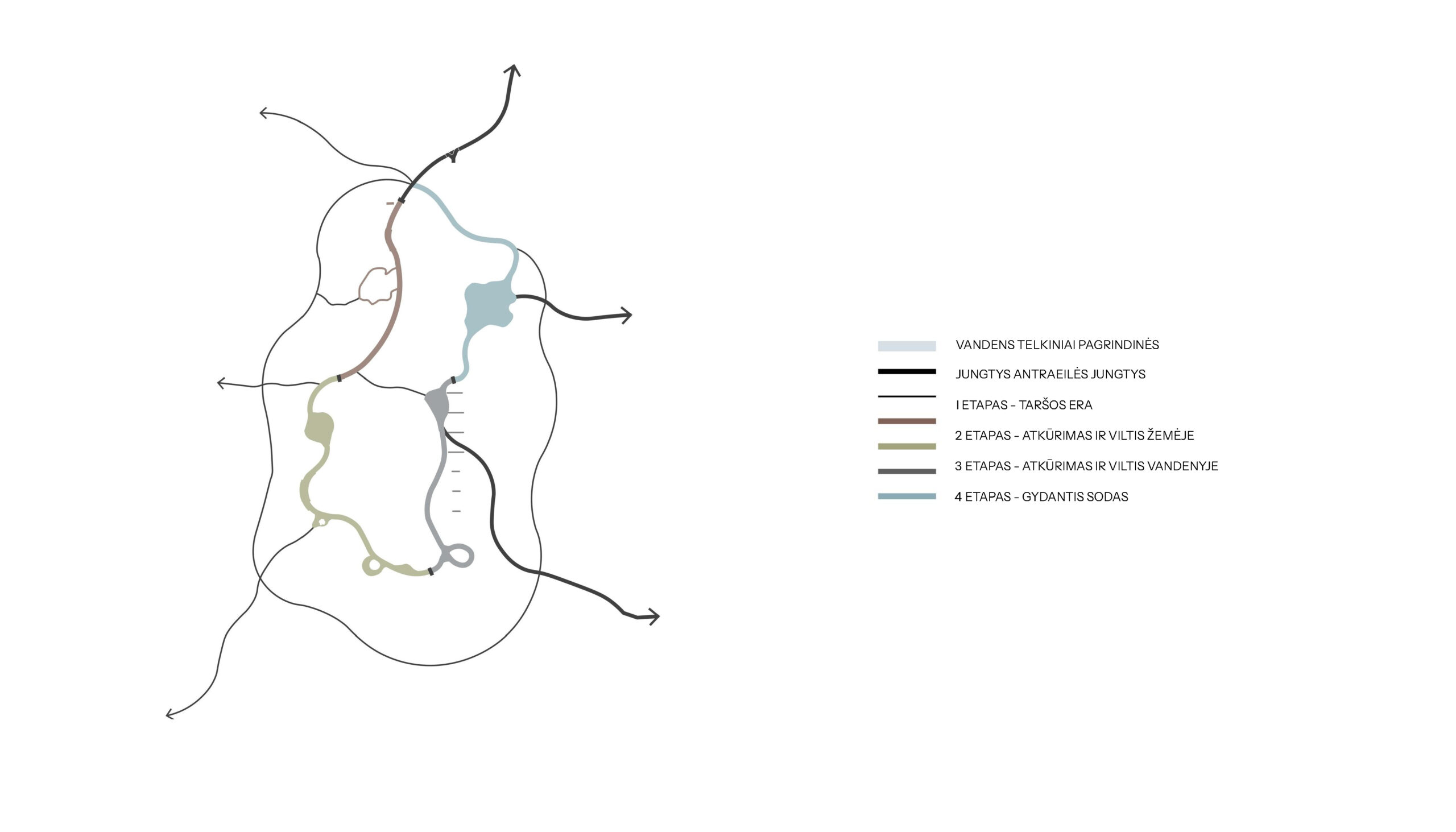
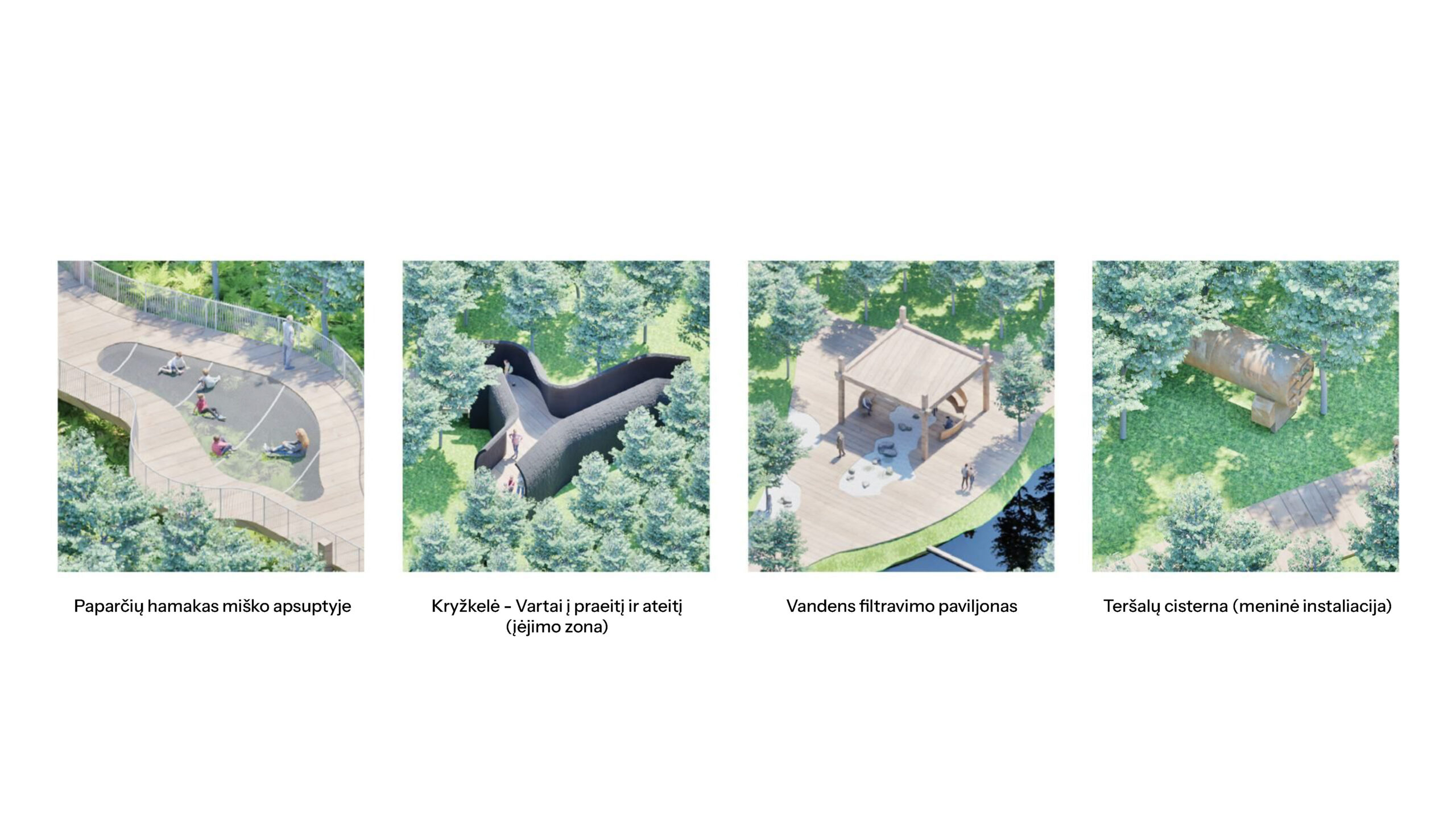
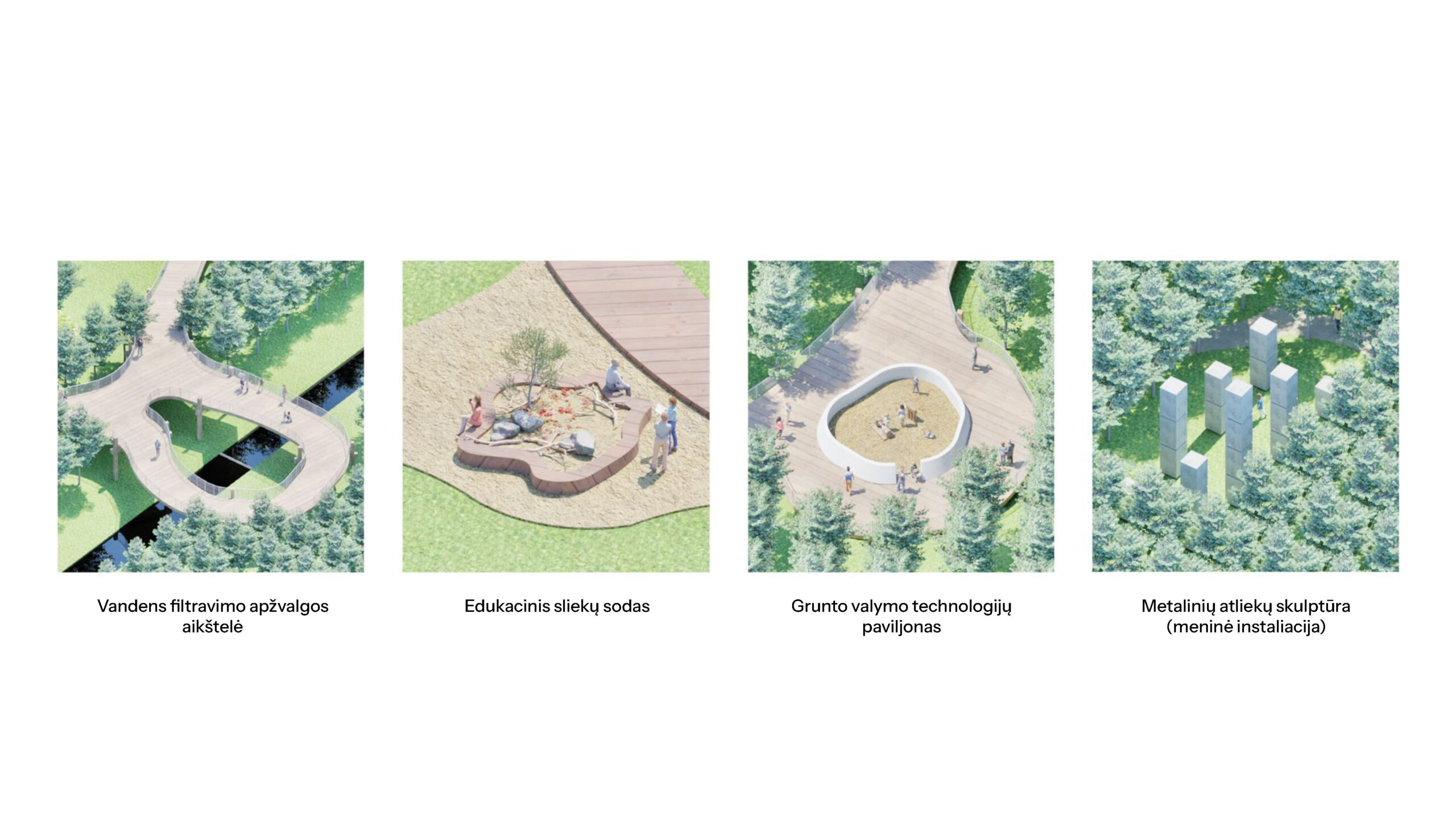
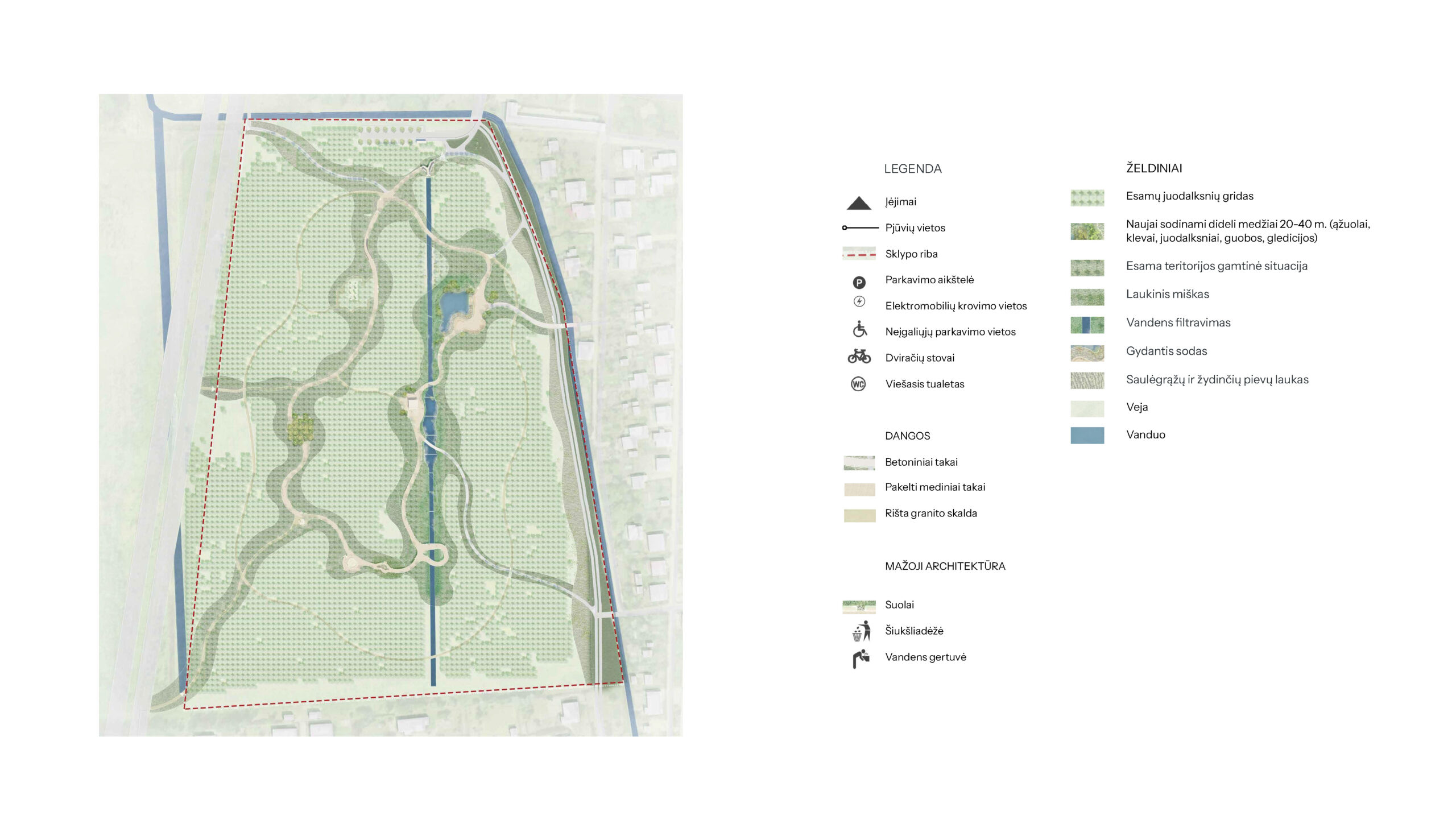
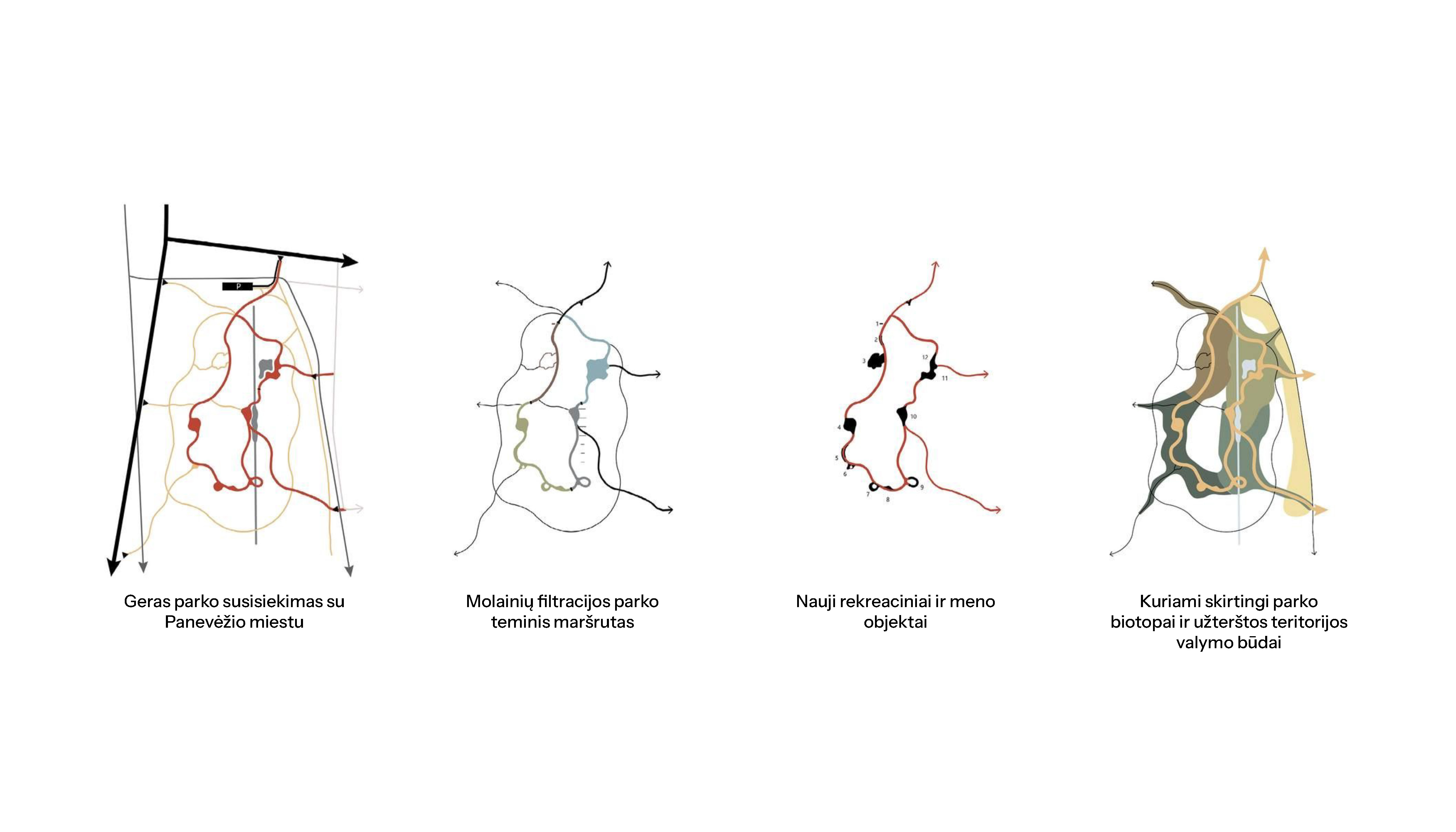
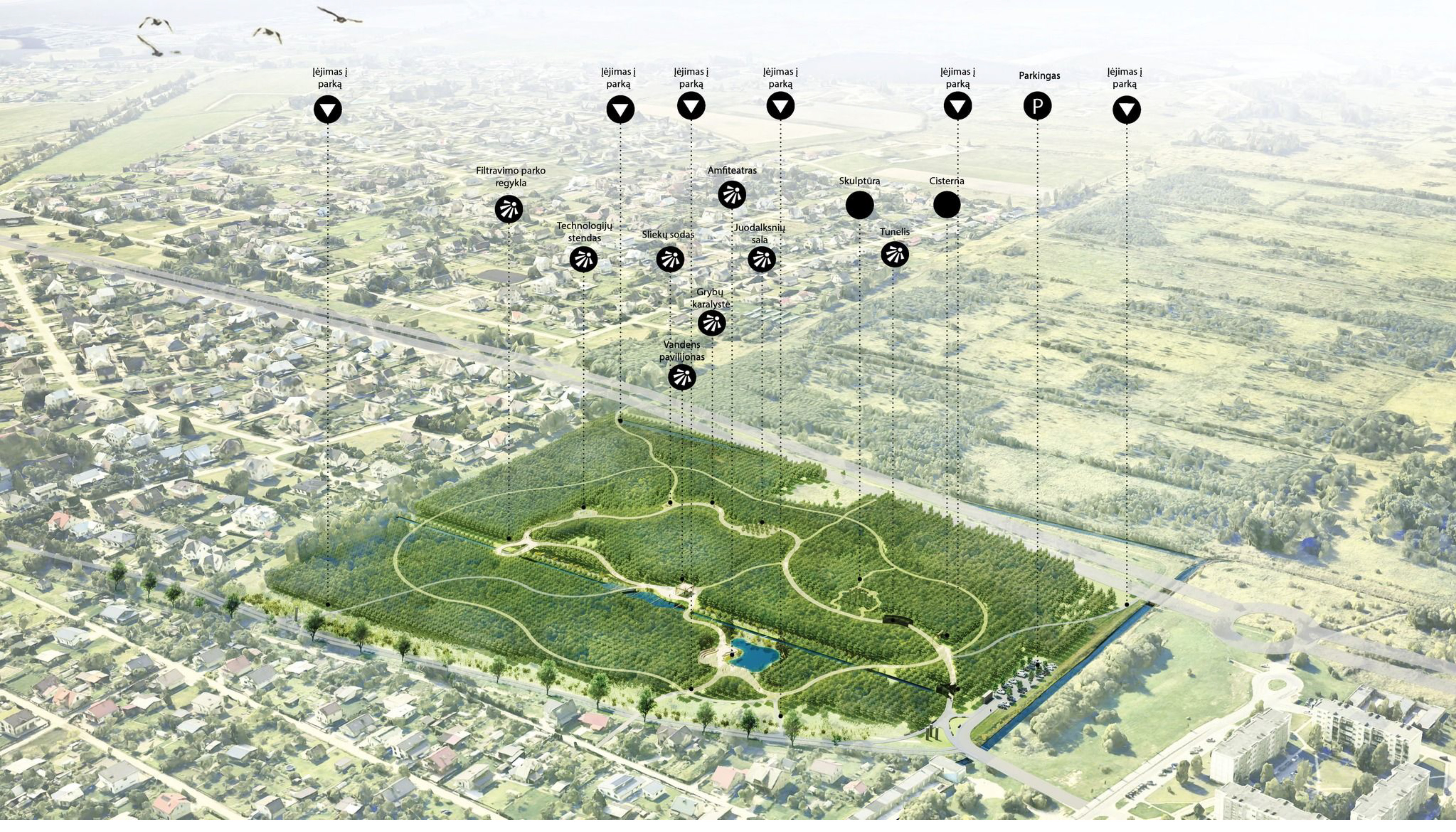
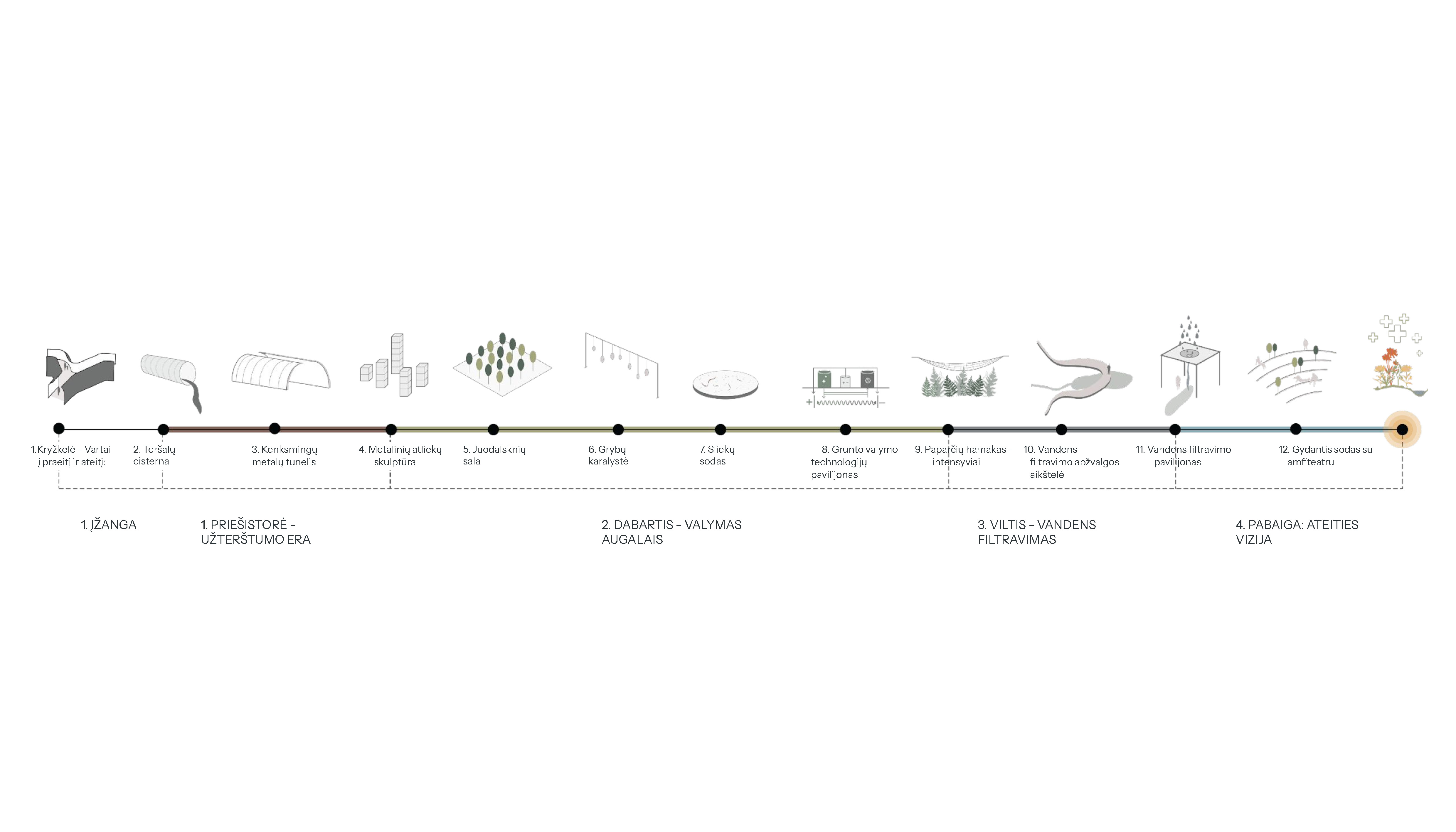
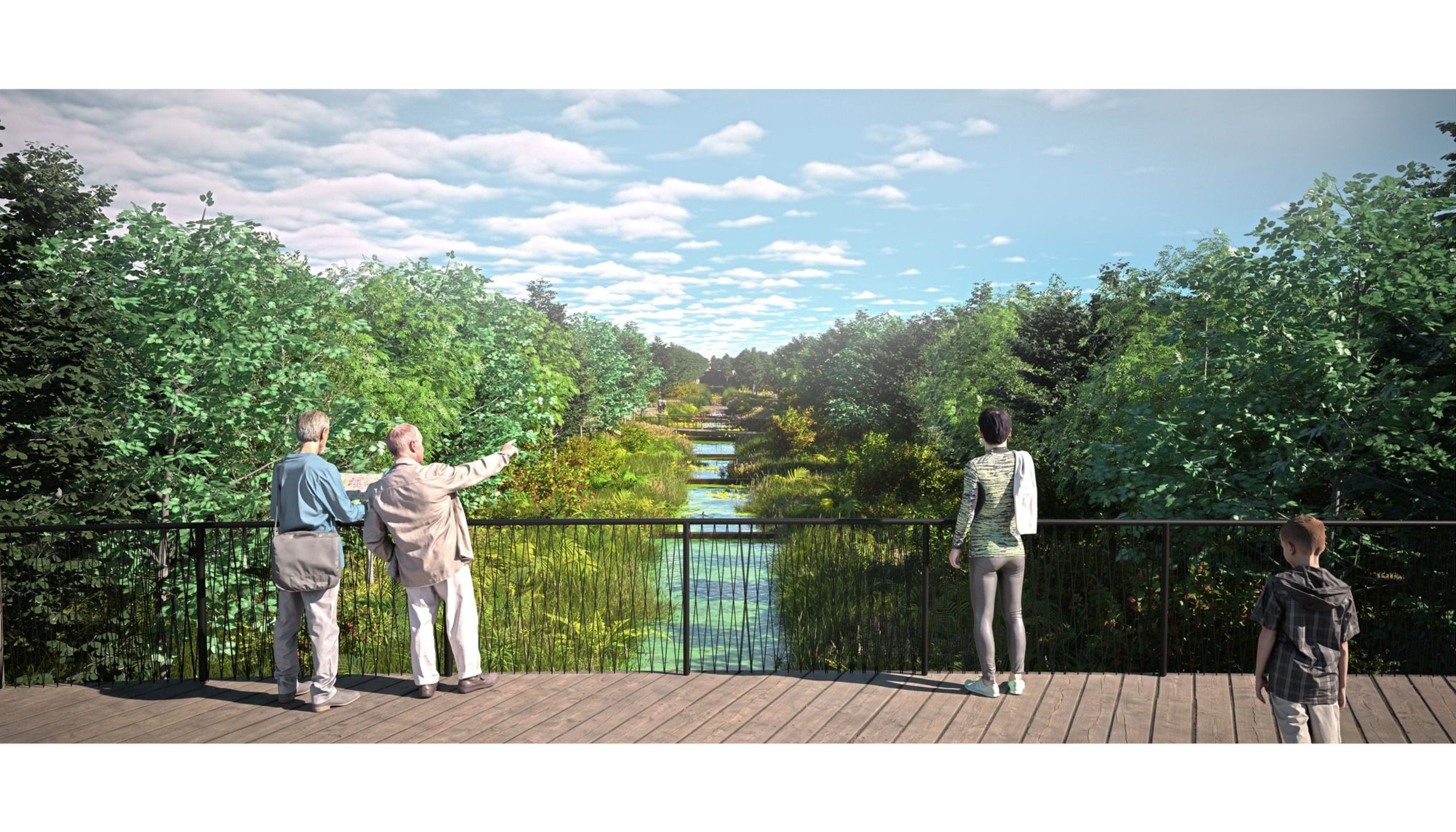
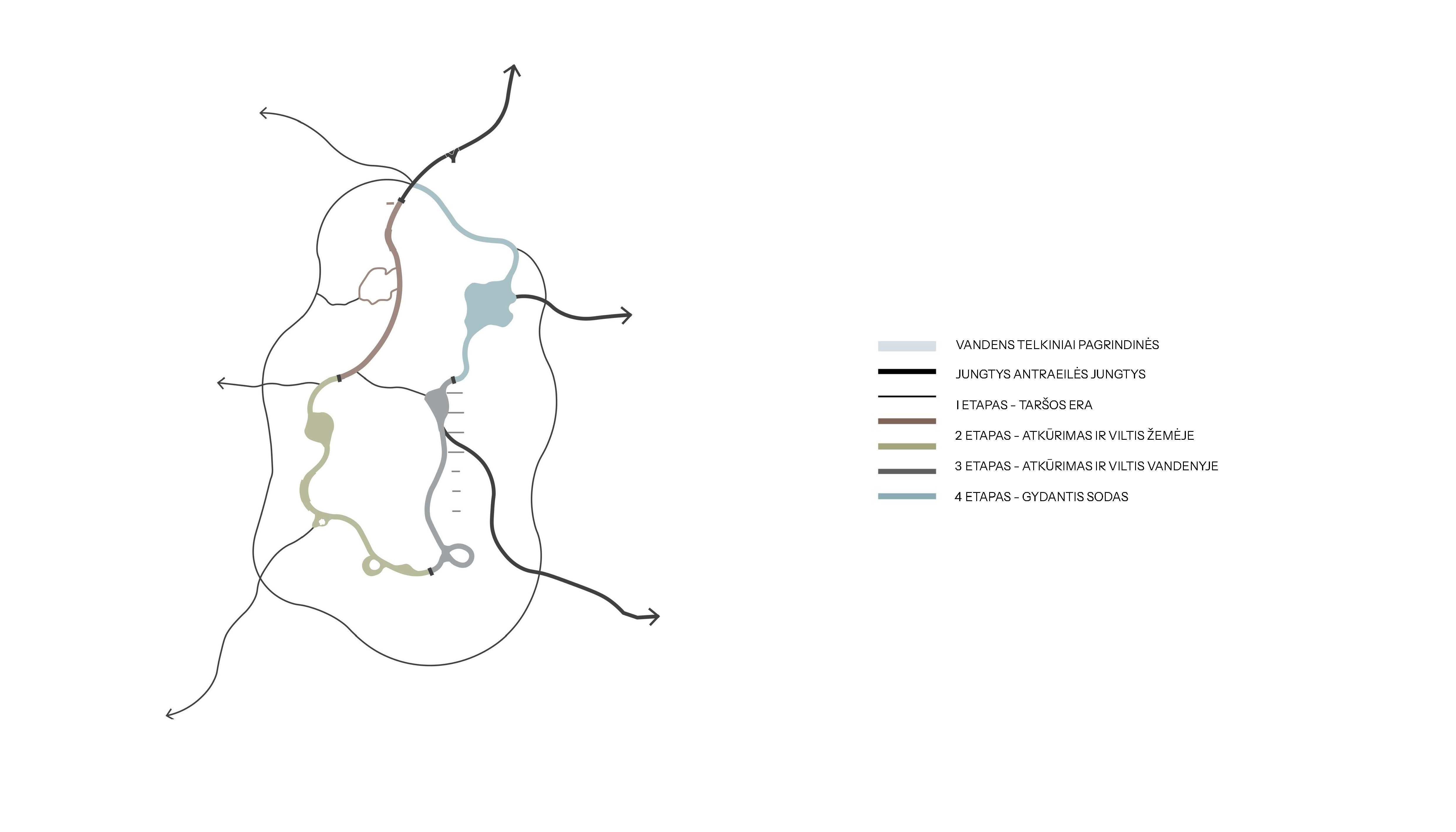
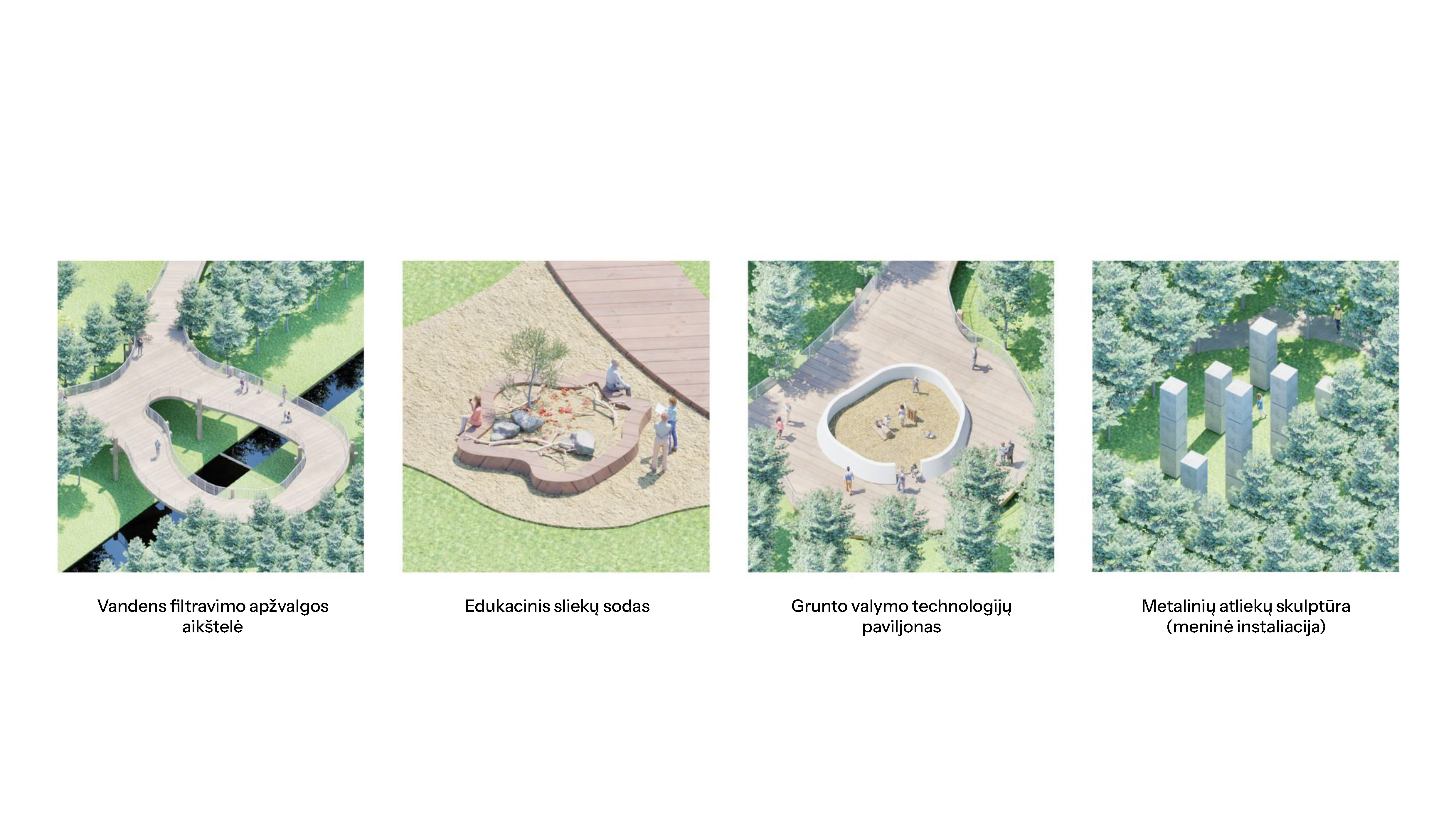
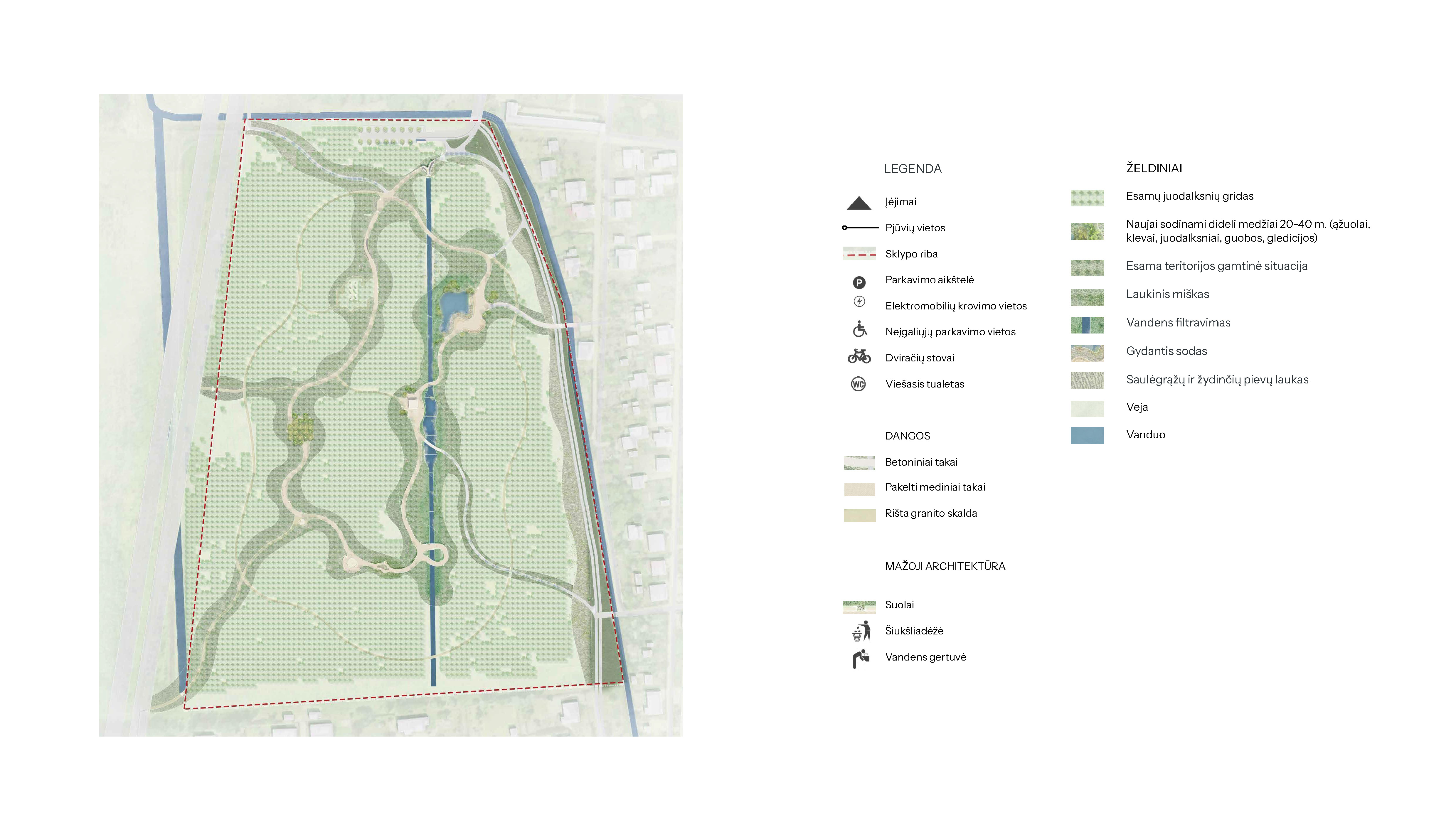
To revive this abandoned and polluted territory, the Molainiai Filtration Park is being designed on a 13.5-hectare site, intended to become a unique green space for recreation and education. The park’s main axis is a thematic path that invites visitors to journey through the symbolic stages of the territory’s transformation. This narrative will span four main zones, reflecting the journey from a polluted past to an ecologically restored future, integrating nature, industrial heritage, and art.
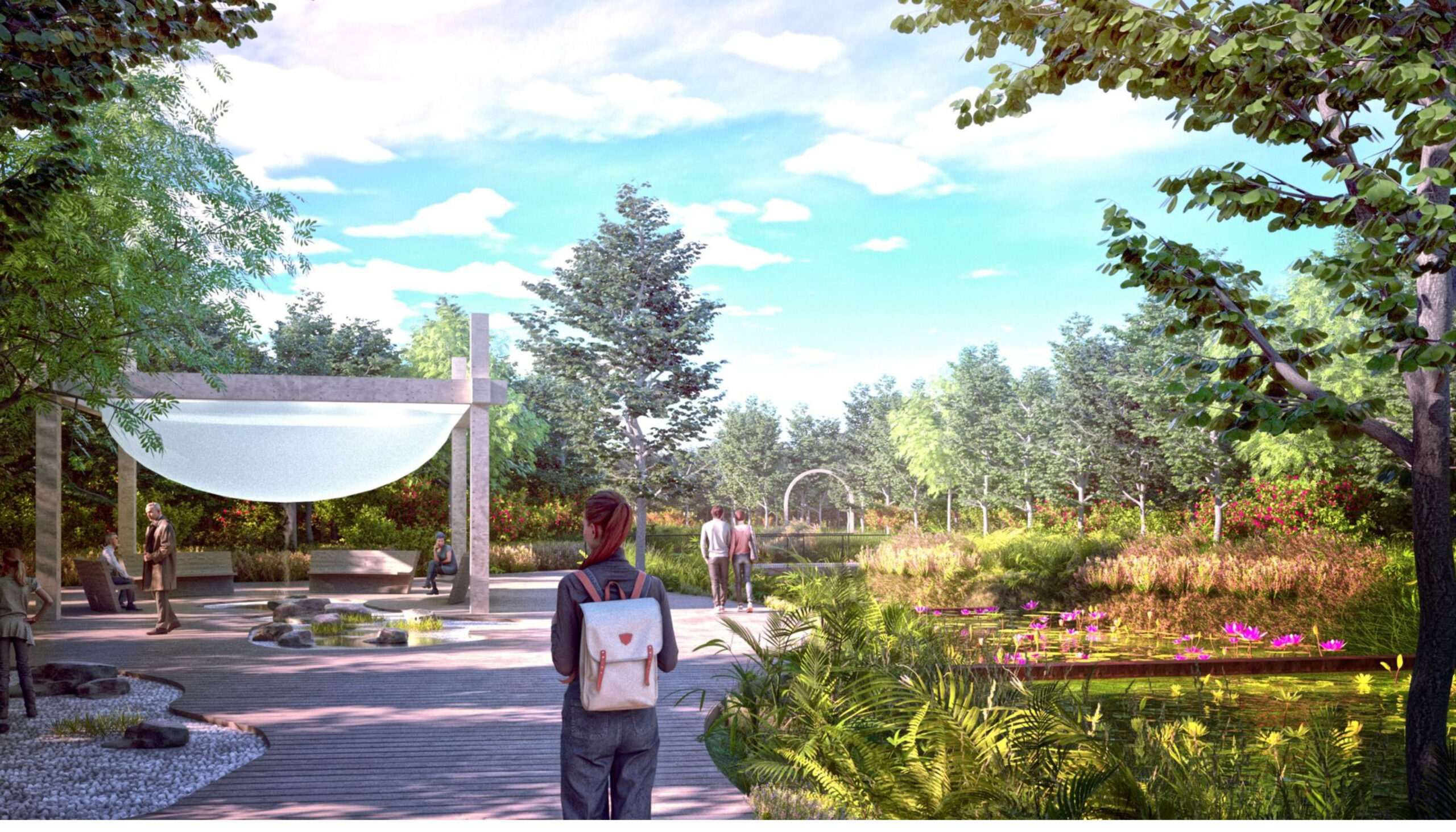
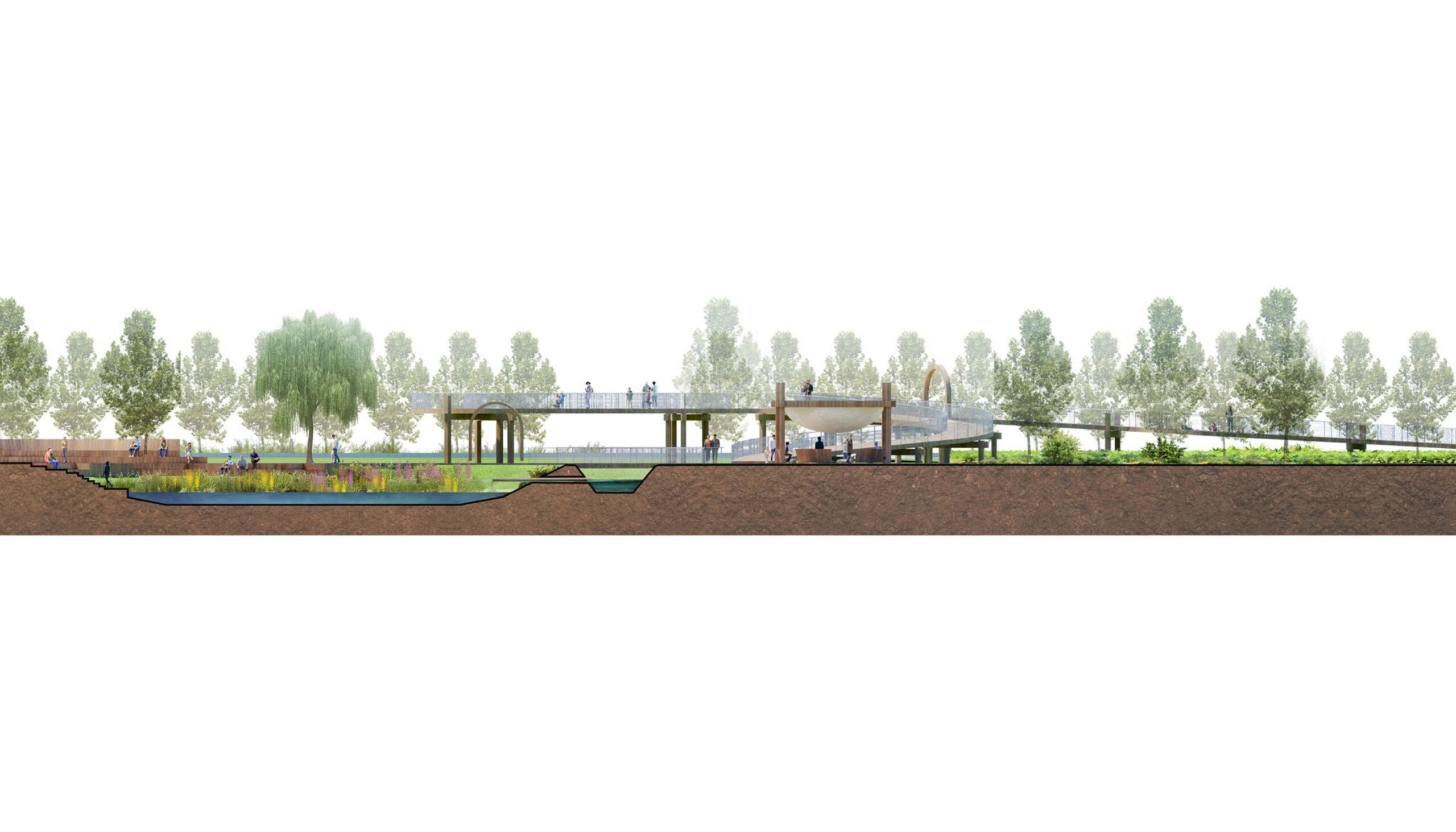
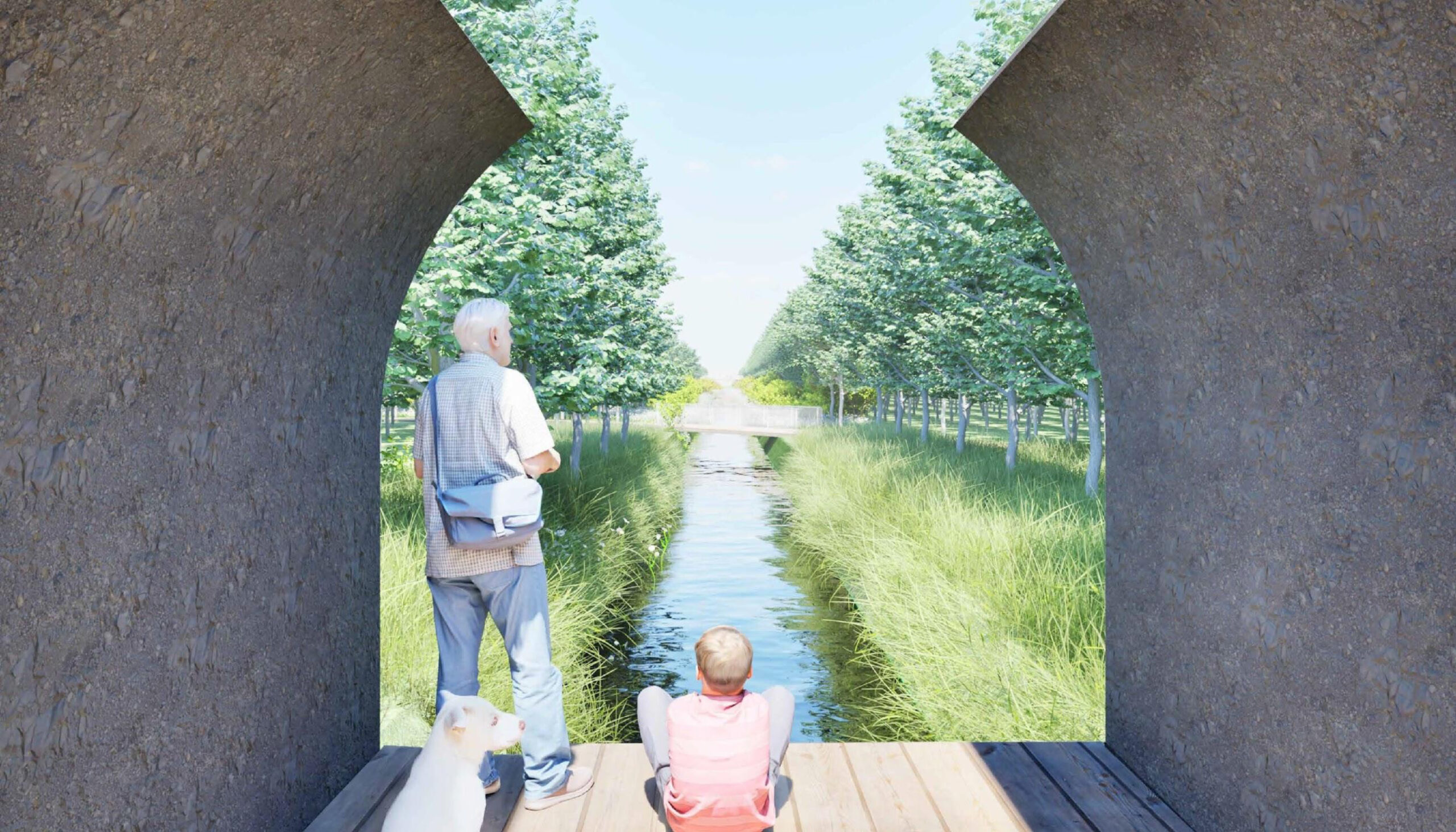
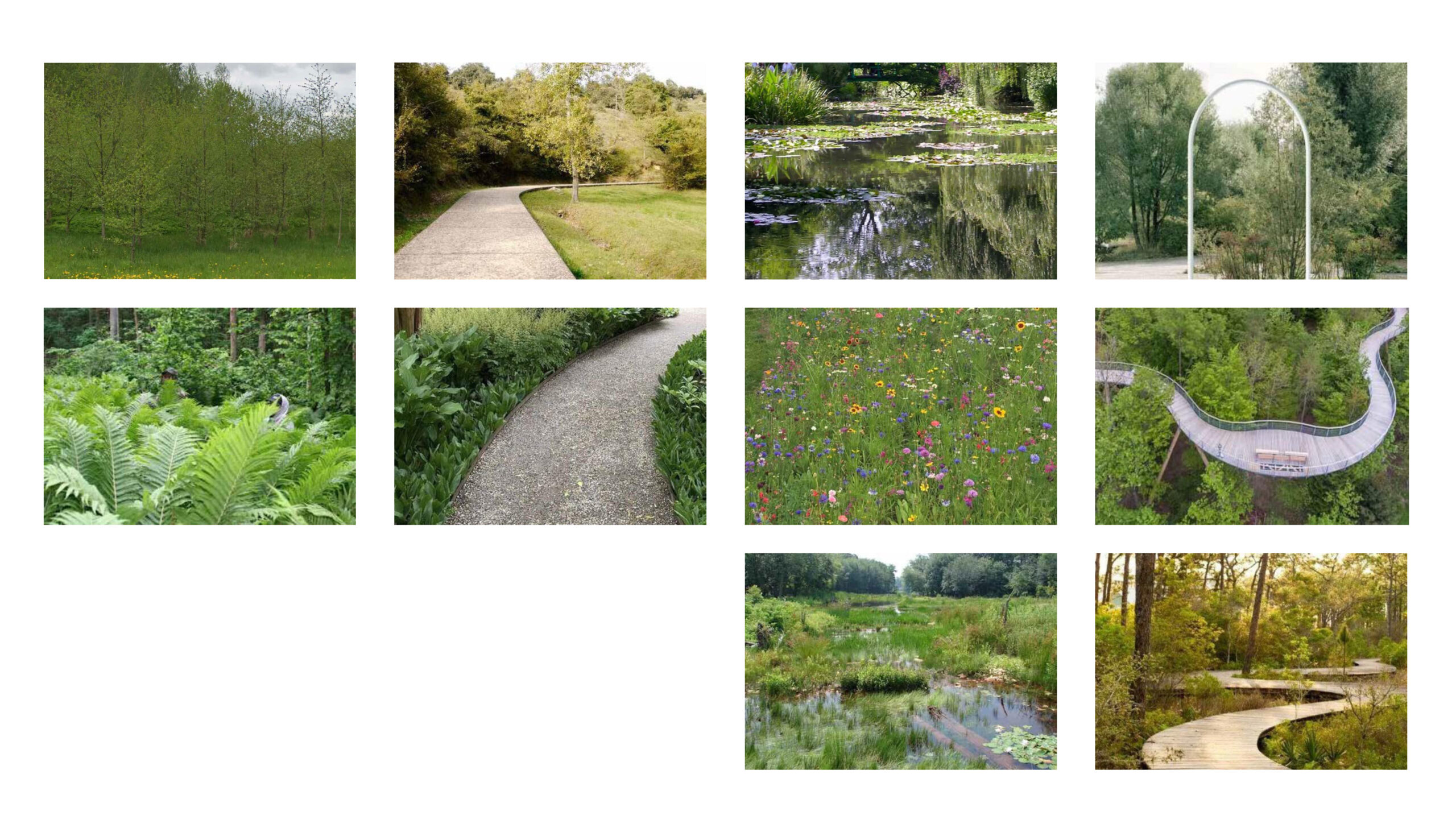
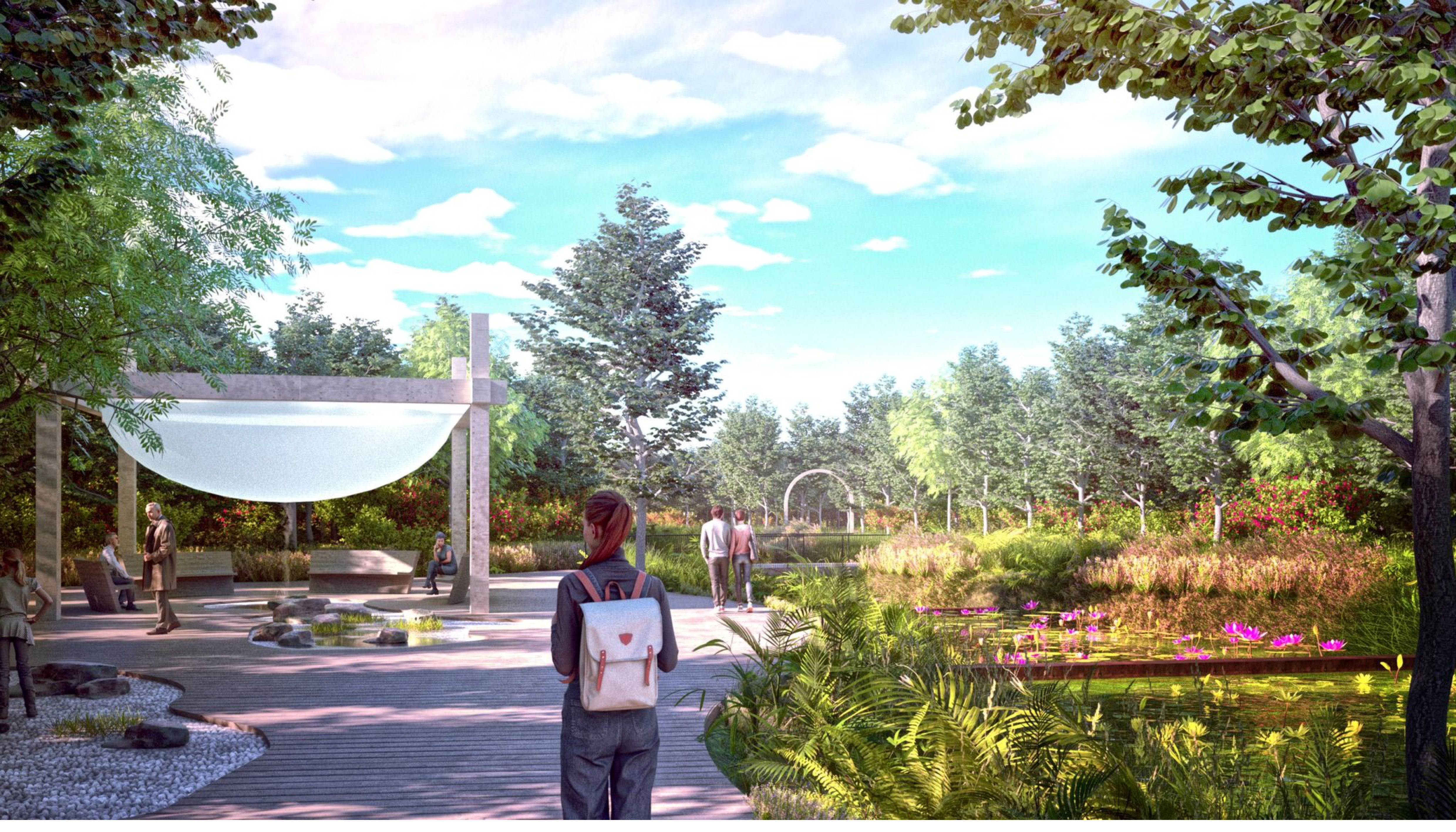
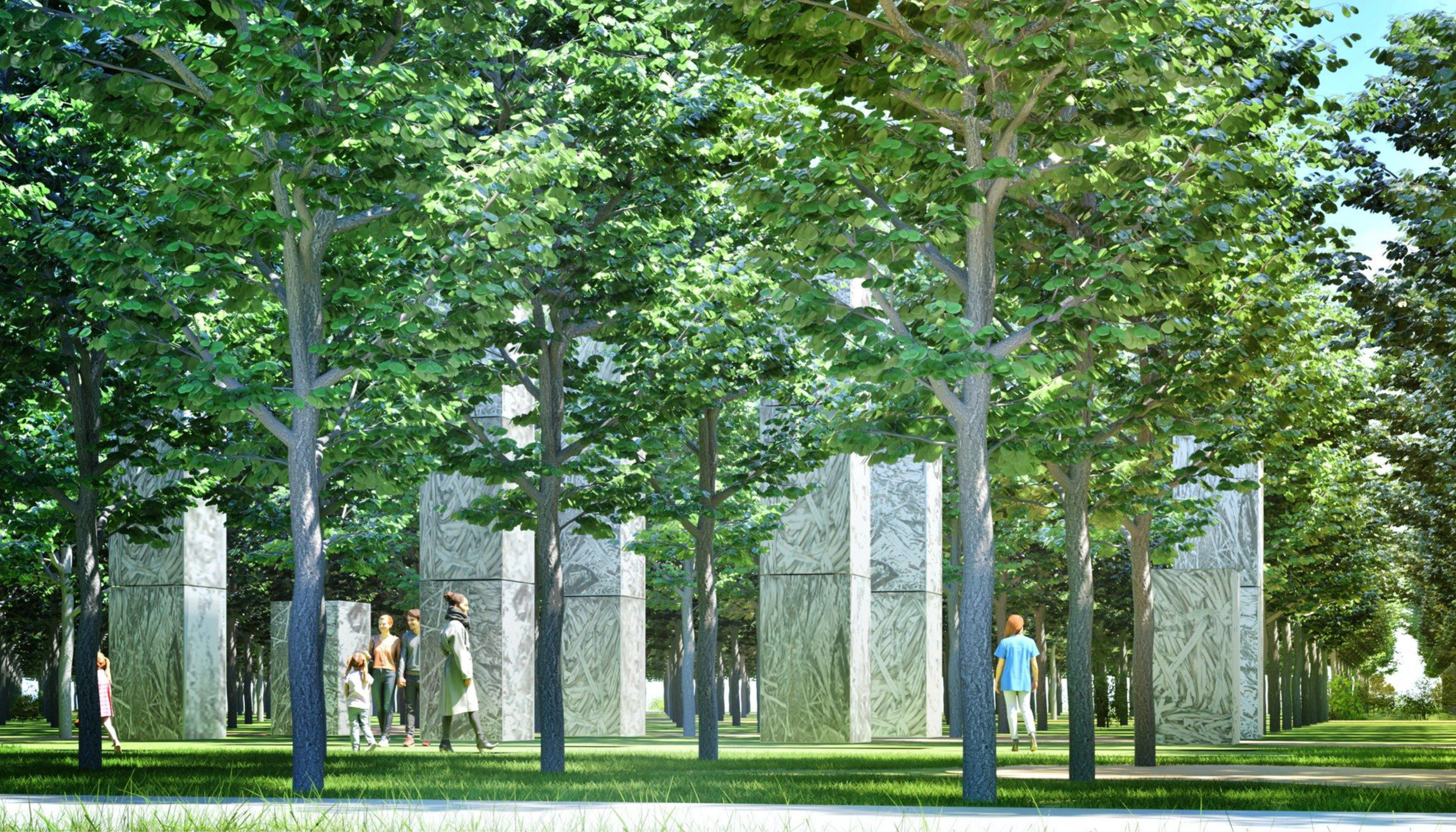
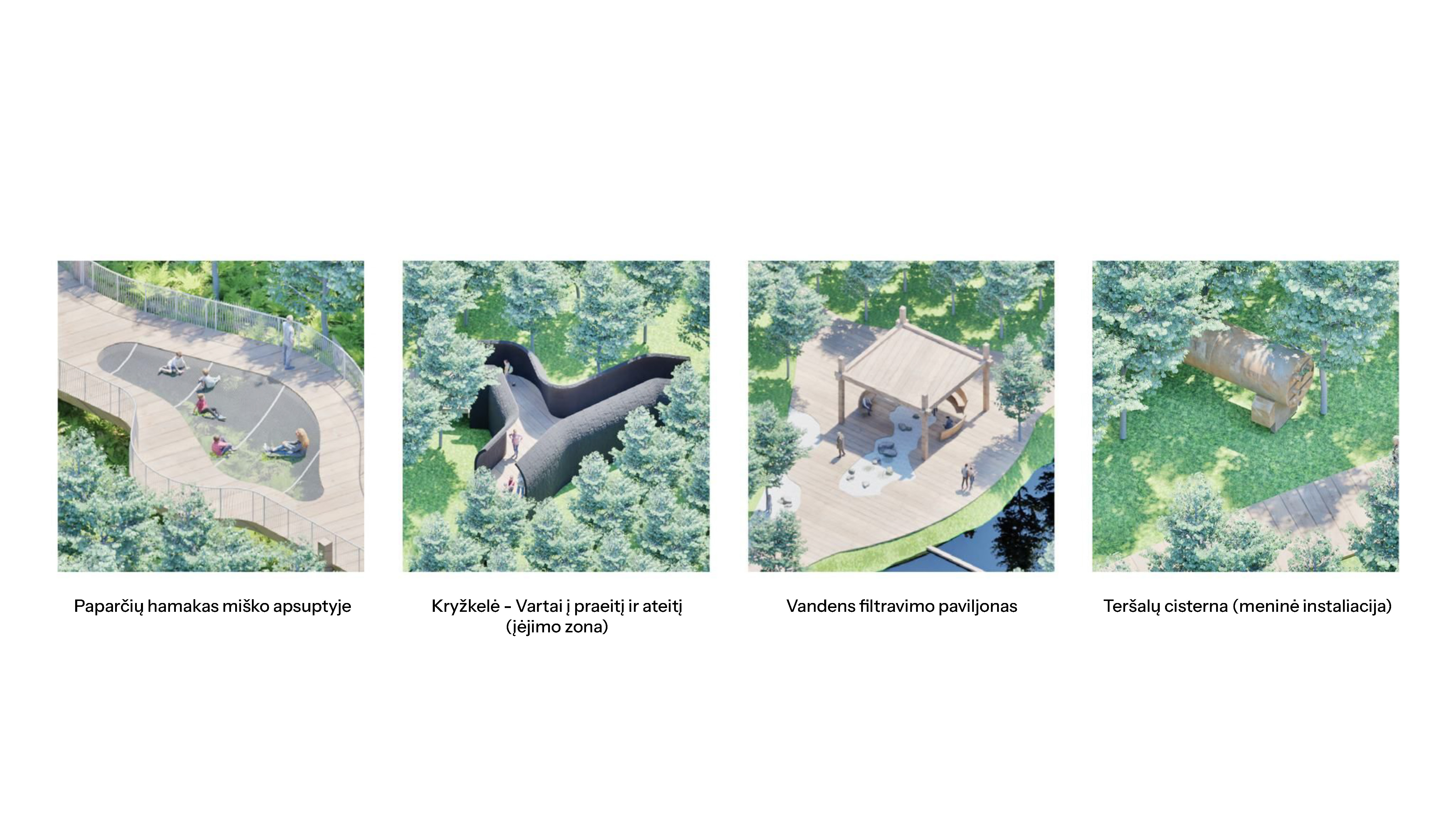
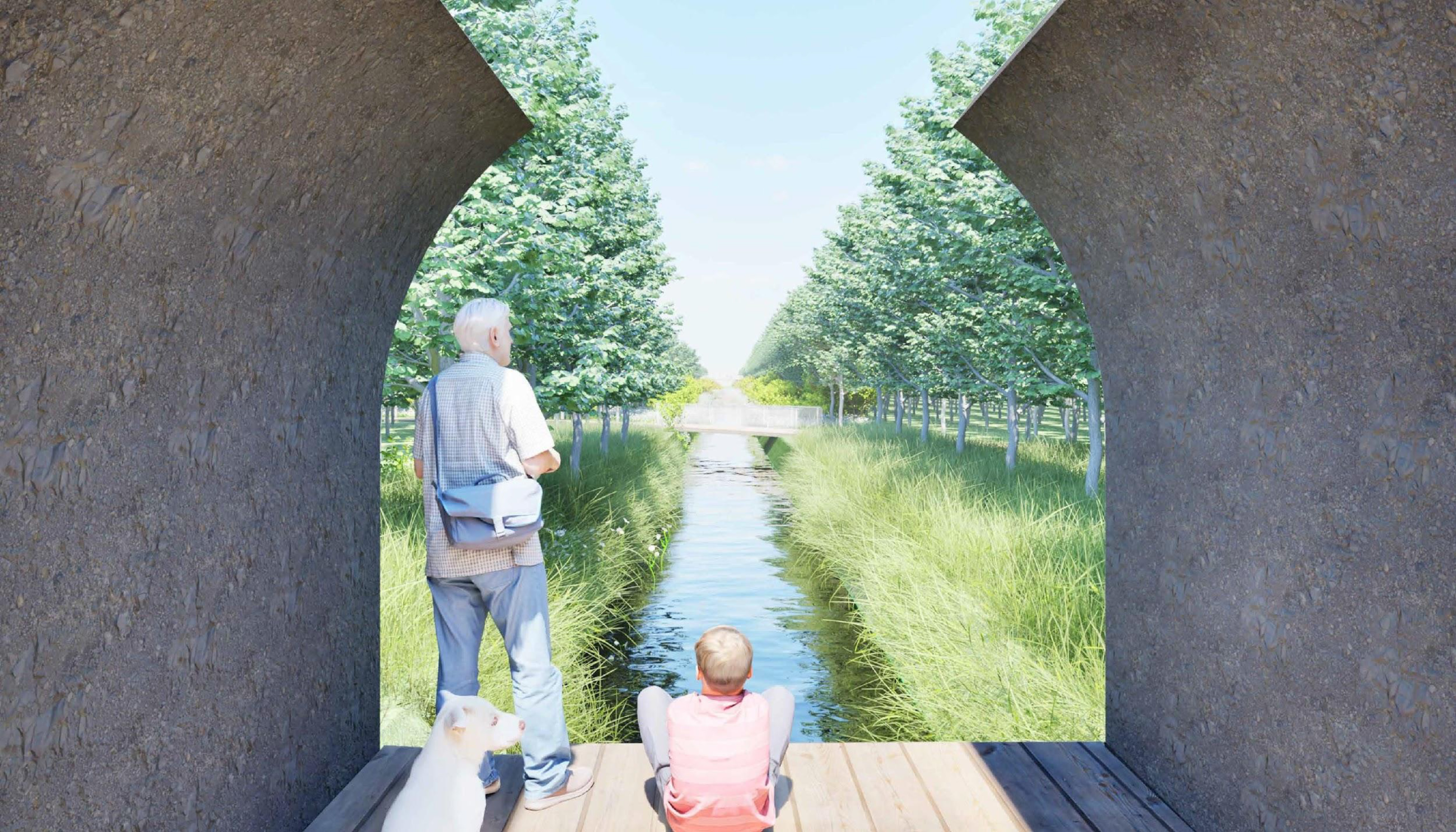
The educational path will begin in the “Prehistory” zone, where art objects, such as a recycled asphalt tunnel and a pollutant cistern, will evoke the industrial legacy and pollution. Later, visitors will move into the “Present” and “Hope” stages, where they can observe phytoremediation processes (soil-cleaning plants, mycelium) and natural water filtration. The journey will conclude in the “Healing Garden,” which embodies the “Future” vision, symbolizing fully restored natural potential—complete with a clean water body, an amphitheater, and new paths—serving as an example of ecological awareness.
Location
Panevėžys/Lithuania
Year
2025/01 – now
Client
Panevėžys City Municipality
Team
Agnė Dailidaitė
Donatas Baltrušaitis
Jonas Vyšniauskas
Rasa Pilkauskaitė
Izabelė Čižinauskienė
Povilas Šimonėlis
Goda Eigelytė